

A kitchen doesn’t need to follow the latest trend to feel considered and inviting. Designing a kitchen that won't date starts with a calm palette, simple cabinetry, natural materials and proportions suited to the room and the way you use it. If your current kitchen is in good condition, changing details such as the colour, handles or worktop can make it feel more timeless without replacing everything.
It’s understandable to want a kitchen that feels fresh now but won’t seem dated in a few years. This guide explores classic styles, muted green with natural wood, practical material choices and finishes that are easier to live with day to day. You’ll also find ways to add personality through details you can update, while keeping the larger design balanced and enduring.
Key Takeaways
- Choose a calm, classic cabinet style and tune its colour to your kitchen’s natural light and character.
- Use muted green with natural wood to bring warmth and colour without relying on a bold, trend-led look.
- Prioritise durable materials, balanced proportions and a layout shaped around everyday use.
- Coordinate flooring, handles and worktops so the finishes feel cohesive, practical and easy to live with.
1. Which Kitchen Styles Won’t Date Quickly?
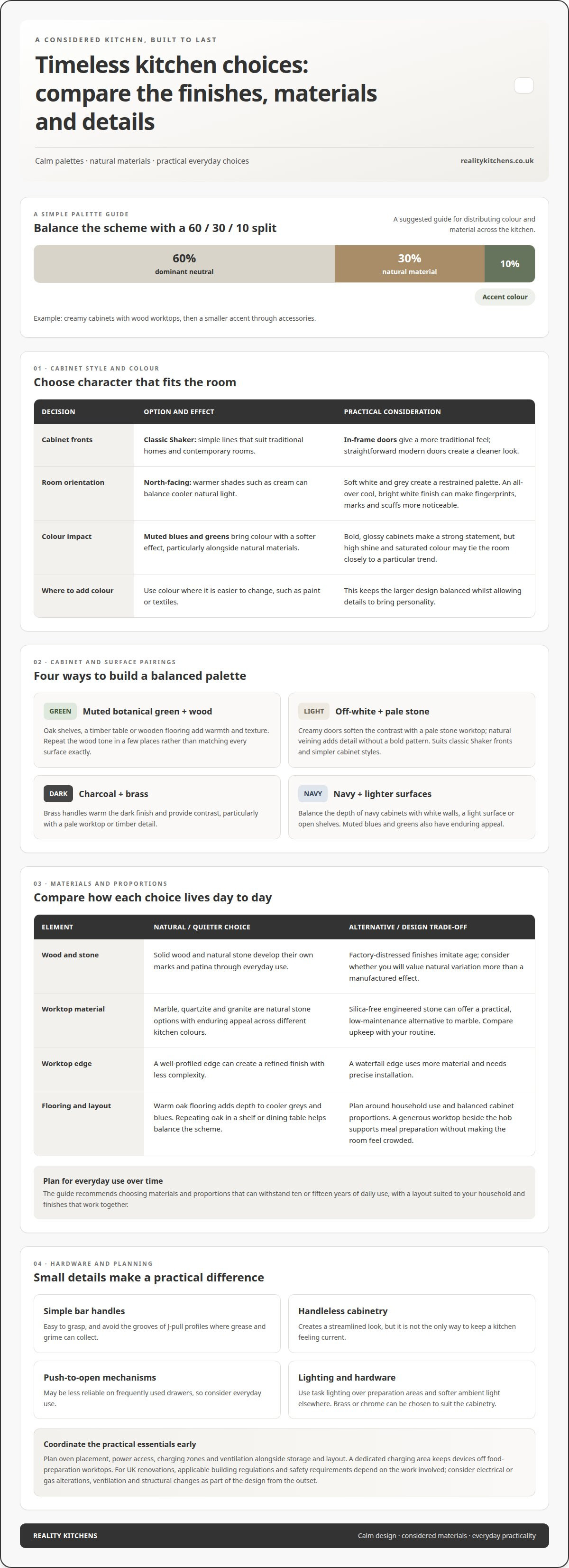
Classic Shaker cabinets are a reliable starting point for a timeless kitchen. Their simple lines suit traditional homes and contemporary rooms, while neutral finishes keep the focus on the architecture rather than a short-lived trend. In-frame cabinetry, with doors set within a frame, gives a more traditional feel; straightforward modern doors create a cleaner look.
Choose colour in response to the room. In a north-facing kitchen, warmer shades such as cream can balance cooler natural light. Soft white and grey can also create a restrained palette, but an all-over cool, bright white finish may make fingerprints, marks and scuffs more noticeable. Layering tones helps: a suggested guide is approximately 60% dominant neutral, 30% natural material and 10% accent colour. For example, pair creamy cabinets with wood worktops and bring in a smaller accent through accessories.
Bold, glossy cabinets can make a strong statement, but their high shine and saturated colour may tie the room closely to a particular trend. Cool, blue-toned greys were associated with the 2010s; warmer greys later became popular. Rather than ruling out colour, use it where it’s easier to change, such as paint or textiles. Muted blues and greens offer colour with a softer effect, particularly alongside natural materials.
For UK renovations, applicable building regulations and safety requirements depend on the work involved. Plan electrical or gas alterations, ventilation and structural changes alongside the cabinets and finishes, rather than treating them as afterthoughts. This ensures essential practical decisions are part of the design from the outset.
To accommodate changing needs and future technology, plan oven placement, power access, charging zones and ventilation alongside storage and layout. For example, a dedicated charging area keeps devices off food-preparation worktops, while adaptable storage can suit changing household routines.
2. Muted green cabinetry with natural wood
Muted botanical green is a favoured kitchen colour choice for 2026, and its lasting appeal comes from its connection to nature. Pair green cabinets with oak shelves, a timber table or wooden floor to add warmth and texture. Keep the layout visually balanced by repeating the wood tone in a few places, rather than matching every surface exactly.
For a lighter scheme, off-white cabinetry works well with stone worktops. Creamy doors soften the contrast with a pale stone surface, while natural veining adds detail without a bold pattern. This combination suits classic Shaker fronts and can also bring warmth to simpler cabinet styles. Choose accessories in a restrained colour so the stone and cabinetry remain the focus.
Charcoal cabinetry creates a stronger mood. Brass handles can warm the dark finish and provide contrast, particularly against a pale worktop or timber detail. Navy cabinets are another classic option; balance their depth with white walls, a light surface or open shelves. Muted blues and greens also have enduring appeal.
Handleless cabinetry creates a streamlined look, but it isn’t the only way to keep a kitchen feeling current. Simple bar handles are easy to grasp and avoid the grooves of J-pull profiles, where grease and grime can collect. Push-to-open mechanisms may be less reliable on frequently used drawers, so consider how the kitchen will work in everyday use.
Lighting and handles can refresh a scheme without changing its core palette. Use task lighting over preparation areas and softer ambient light elsewhere, then choose brass or chrome hardware to suit the cabinetry. For a cohesive result, bespoke kitchen design can bring the cabinet colour, natural wood and practical details together.
3. Choosing durable materials and proportions
Plan the kitchen around materials and proportions that can withstand ten or fifteen years of daily use. To keep it feeling current in ten years, give priority to a layout that suits your household, balanced cabinet proportions and finishes that work together. A generous worktop beside the hob, for example, supports meal preparation without making the room feel crowded.
Natural materials can gain character through everyday use. Solid wood and natural stone develop their own marks and patina over time, unlike factory-distressed finishes designed to imitate age. This difference matters in traditional and modern kitchens alike: choose a surface whose natural variation you’ll appreciate, rather than a manufactured effect that may feel tied to current trends.
Warm oak flooring pairs well with cooler greys and blues, adding depth to a neutral scheme. The wood grain brings texture, while the cooler cabinet colour keeps the palette composed. For a balanced kitchen, repeat the oak in a shelf or dining table rather than introducing several competing wood tones. Simple lines and careful craftsmanship let the materials take centre stage.
Choose a worktop for everyday use as well as its colour and finish. It needs to suit tasks such as preparing meals and making coffee. Marble, quartzite and granite are natural stone options with enduring appeal across different kitchen colours. A silica-free engineered stone surface can offer a practical, low-maintenance alternative to marble. Compare the upkeep each option requires and how its surface will fit your routine.
Details also affect longevity. A waterfall edge uses more material and needs precise installation; a well-profiled edge can create a refined finish with less complexity. Rather than making every element a feature, pair one distinctive surface with quieter cabinets and flooring. That balance lets quality materials, sound proportions and considered workmanship carry the design beyond short-lived trends.
4. Coordinating flooring, hardware and worktops
Treat flooring, handles and worktops as connected elements, not separate finishing choices. Start with the room’s architecture and fixed features, such as exposed timber or a tiled floor. Then decide whether cabinets should blend with those tones or provide contrast. A pale worktop, for example, can link light flooring with darker cabinets, while a similar-toned surface creates a quieter effect.
Brass and chrome hardware are established choices for a timeless kitchen. Brass brings warmth to painted cabinets, nickel offers balance, and black creates sharper contrast. Choose handles that complement the cabinet colour and feel practical on cupboards and drawers. Matching the finish across the main handles and taps can make the scheme feel deliberate; a contrasting metal can instead highlight a particular run of cabinets.
Worktop colour can echo the floor or provide contrast. Stone surfaces have enduring appeal across kitchen colours, and a natural pattern can add interest without relying on a strong cabinet shade. A softly veined stone worktop, for instance, can sit comfortably with painted cabinetry and natural wood. White subway tiles are another classic splashback choice; texture or coloured grout can add detail without dominating the room.
Before settling on finishes, view samples together in the kitchen’s lighting. A cool grey floor may make a warm worktop appear more pronounced, while a dark surface can increase contrast with light cabinets. Check how the handle finish, worktop edge and flooring look together. This simple step helps each material complement the others and the character of the room.
For a cohesive scheme, explore kitchen worktop options alongside your flooring and hardware choices. Bringing these elements together early helps the finished kitchen feel considered, practical and beautiful, rather than assembled from separate popular trends.
Reality Kitchens: Bespoke Kitchen Design
Reality Kitchens can turn timeless design principles into a kitchen shaped around your home and daily routines. Whether you’re planning a full redesign or updating key elements, bespoke kitchen design brings the colour palette, cabinetry and layout together before you choose components, appliances and worktops.
Design decisions are informed by seeing your kitchen at home, including its natural light, existing architecture and how you use the space. This helps balance enduring finishes with personal touches, so the result feels individual rather than dictated by a passing trend. Supplied components, appliances and worktops are backed by a ten-year guarantee.
Ready to explore a more timeless kitchen for your home? Contact Reality Kitchens to discuss your plans and arrange a home visit.
Start with how your kitchen needs to work
Before settling on a final design, picture an ordinary day at home. Where do shopping bags land? Do several people prepare food together, or does one person cook while others gather nearby? How often you cook from scratch versus dining out—whether mastering elaborate recipes at home or enjoying weekend meals at places such as Best Indian Food in Hayward, CA | Favorite Indian Restaurant | Indian Food near me—can shape decisions about clear work surfaces, circulation and storage more reliably than a passing style forecast.
Designing a kitchen that won't date also means leaving room for life to change. A growing family, new cooking habits or more time spent entertaining may alter what you need from the space. For those moving into a new property with the help of Atlas International Movers & Cargo Shipping, establishing an adaptable, enduring kitchen design right from the start avoids costly updates down the line. Keep fixed elements grounded in your home and routines, then let smaller details express your personality. The result can feel personal now and remain practical as everyday needs evolve.
Ready to turn your priorities into a considered plan? Contact Reality Kitchens to discuss your kitchen. A thoughtful first step can bring your ideas into focus and make the design process feel more manageable.
Frequently Asked Questions
Can I make my current kitchen more timeless?
Yes, you can update a kitchen’s appearance without replacing every unit. When designing a kitchen that won't date, first consider whether sound cabinet doors could be repainted or new handles would make a useful difference. Replacing a worn worktop can also change the room’s character. Start with the element that feels most out of step, then see whether the remaining finishes still complement it.
Which Kitchen Styles Won’t Date Quickly?
Shaker cabinetry is a strong choice because its straightforward profile suits period homes and newer properties. Simple modern doors can also provide a calm backdrop. Consider how the style relates to your home: a traditional door may complement original features, while a cleaner design can suit contemporary architecture. Restrained surrounding finishes help the cabinet style sit comfortably within the room.
Are dark kitchens still in style for 2026?
Dark kitchens can work in 2026 if the scheme suits the room and feels balanced. Deep charcoal or navy cabinets, for example, can be offset with pale walls, a lighter worktop or timber details. In a small or shaded kitchen, use darker tones selectively and plan lighting for food preparation and other everyday tasks. Choose a scheme for its comfort and function, not simply its current popularity.
How do I choose a kitchen design that won’t feel dated in ten years?
Designing a kitchen that won't date means making fixed choices around your home and routines, rather than following a short-lived look. Consider how you cook, where storage is most useful and whether several people use the room together. Clear circulation and adaptable storage can support changing habits. Keep more individual preferences in details that are easier to refresh if your taste or needs shift.
Is a waterfall worktop worth the extra cost?
It depends on whether the continuous surface down the island’s side matters to your design. A waterfall edge uses more material and needs precise installation, so weigh its visual effect against the worktop’s everyday role. If you mainly want a refined finish, a well-profiled edge can provide definition without the same uninterrupted side panel. The right choice depends on the island’s place in the overall scheme.
Is open shelving a practical choice for a family kitchen?
Open shelving can be practical if it serves a clear purpose and doesn’t replace all your cupboards. A shelf near the kettle could hold mugs used daily, while closed storage keeps less orderly essentials out of sight. Think about what your household reaches for often and how much display space you want to maintain. That balance helps open shelves stay useful rather than becoming a landing place for clutter.


