

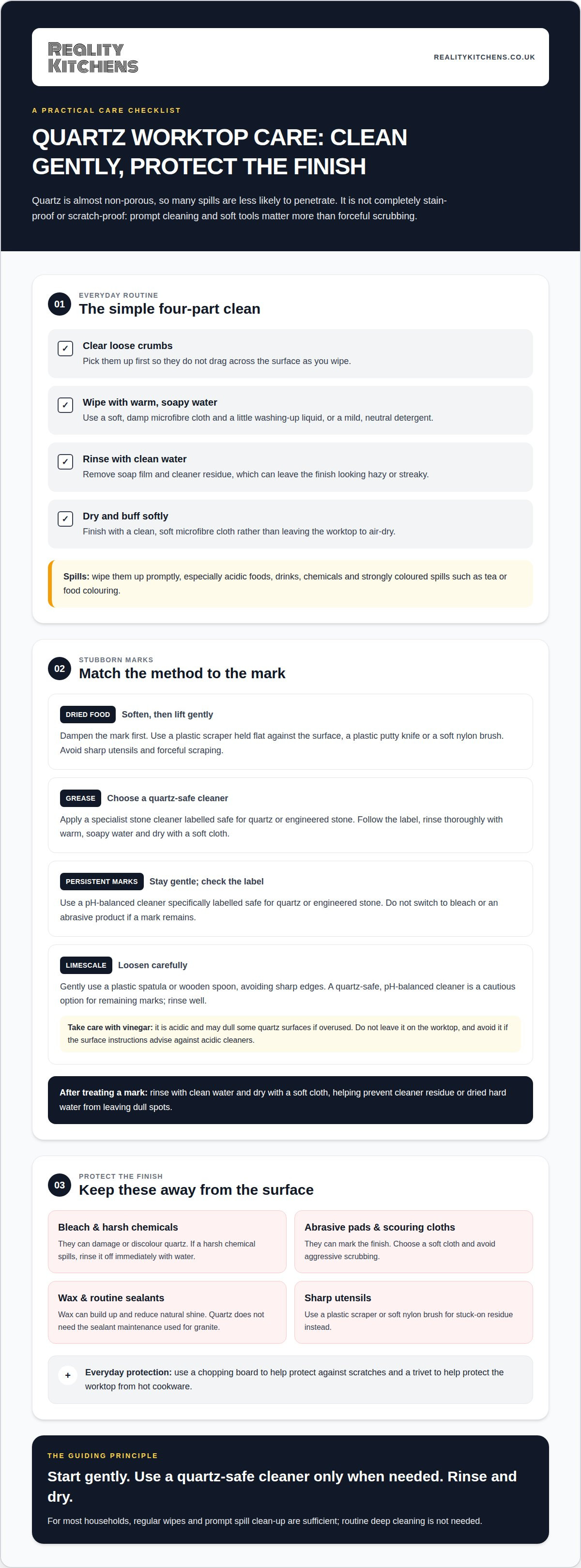
For everyday cleaning, how to care for quartz worktops is straightforward: use warm water with a little washing-up liquid, then rinse with clean water and dry with a soft microfibre cloth. Wipe up spills promptly, and choose a cleaner labelled safe for quartz or engineered stone if you need something stronger. Avoid bleach, abrasive pads and harsh chemicals, which can damage or mark the surface.
Quartz is made from crushed natural quartz combined with resins and pigments. Its almost non-porous surface makes staining less likely, but it is not completely stain-proof, so gentle, prompt cleaning matters more than forceful scrubbing.
This guide explains which mild cleaners are suitable for routine care, how to tackle dried food, grease and other stubborn marks, and what to avoid to help protect the finish. You’ll also learn how a soft cloth, a thorough rinse and careful drying can clean your worktop without unnecessary wear.
Key Takeaways
- Keep bleach, abrasive scrubbers and wax away from the surface to help preserve its finish.
- For dried-on marks, use a gentle plastic scraper or soft nylon brush rather than a sharp utensil.
- Match your approach to the stain: grease and limescale may need different quartz-safe cleaning methods.
- Use a chopping board and a trivet to help protect the worktop from scratches and hot cookware.
Avoiding harsh chemicals and abrasive scrubbers
Quartz resists many everyday marks, but harsh cleaning can still damage or dull its finish. Use mild products and soft tools, and clean spills promptly.
-
Choose suitable cleaners
Start with warm water and washing-up liquid, or use a mild, neutral detergent for routine cleaning. For a stronger product, check that its label says it is safe for quartz or engineered stone. Avoid bleach, which can damage or discolour the surface. If a harsh chemical comes into contact with the worktop, rinse it off immediately.
-
Prevent stains from food, dyes and chemicals
Wipe up spills as soon as they happen, especially acidic foods, drinks and chemicals, which can permanently damage quartz. Food colouring, tea and other strongly coloured spills can also leave marks if left on the surface. Use a soft, damp microfibre cloth rather than an abrasive pad, then rinse away any cleaner residue.
-
Restore shine without wax or sealants
Rinse the cleaned area with fresh water and buff it dry with a clean, soft microfibre cloth. This removes residue that can make the finish look dull or streaky. Don’t apply wax, which can build up and reduce the surface’s natural shine. Quartz worktops don’t need the sealant maintenance used for granite, so avoid applying sealants as part of routine care.
- Keep abrasive cloths and scouring pads away from the surface, as they can leave marks. Use a soft cloth instead, and avoid aggressive scrubbing even when a mark is stubborn. Don’t use a product simply because it is intended for stone; check that it is specifically labelled safe for quartz or engineered stone. If a harsh chemical spills, rinse it off immediately with water.
Removing dried-in and stubborn stains
Start with the gentlest method, then move to a quartz-safe cleaner if needed, using a soft tool rather than force. Rinse and dry each treated area so loosened residue doesn’t settle back onto the surface.
-
Remove grease and food stains
Lift dried food gently with a plastic scraper or soft nylon brush, keeping the tool flat against the surface. For oily smears or cooking grease, apply a quartz-safe specialist stone cleaner to the affected area. These products can help break down grease and built-up residue without abrasive scrubbing. Follow the label, then rinse thoroughly with warm, soapy water and dry with a soft cloth.
-
Treat stubborn marks
Soften a stuck mark with a damp cloth before scraping, rather than trying to prise it off in one forceful movement. Use a plastic putty knife or scraper for sticky food; avoid sharp utensils, which can scratch the finish. A soft nylon brush can help lift remaining residue. For a persistent stain, use a pH-balanced cleaner labelled safe for quartz or engineered stone, not bleach or an abrasive product.
-
Remove limescale
Loosen limescale deposits with a plastic spatula or wooden spoon, moving gently and avoiding sharp edges. A quartz-safe, pH-balanced cleaner is a cautious choice for remaining marks; follow its label and rinse the area well. Vinegar and water are sometimes used for limescale, but vinegar is acidic and may dull some quartz surfaces if overused. Don’t leave it on the worktop, and avoid it if the surface instructions advise against acidic cleaners.
- Finish by rinsing the treated area with clean water, then drying it with a soft cloth. This helps prevent cleaner residue and dried hard water from leaving dull spots. If a tea spill containing milk or another mark remains after gentle cleaning, don’t turn to bleach or a scouring pad. Repeated abrasive treatment can mark the surface; a quartz-safe specialist cleaner is a more suitable next step.
Routine cleaning with soapy water or mild detergent
For everyday kitchen cleaning, warm water and mild soap are a sensible starting point. Knowing how to care for quartz worktops means keeping your routine gentle and consistent, rather than reaching straight for specialist cleaning products.
-
Clean with warm water and mild soap
Wipe the surface with a soft, damp microfibre cloth and warm water mixed with a little washing-up liquid. Clean the whole worktop, including cooking areas near the hob and preparation spaces where food residue collects. Rinse the cloth and remove any soap film with clean water. Pick up loose crumbs first so they don’t drag across the quartz as you wipe.
-
Maintain shine with regular cleaning
Clean everyday splashes before they dry, then wipe the worktop regularly to remove dust and light residue. Leftover detergent or hard-water droplets can create a hazy finish, so rinse and dry the surface rather than letting it air-dry. A clean, dry microfibre cloth helps buff away streaks. Regular weekly wipes and prompt spill clean-up are sufficient for most households, without routine deep cleaning.
- For a deeper clean, choose a pH-neutral cleaner labelled safe for quartz or engineered stone. Follow its directions, including the recommended application method and contact time. Wipe the area clean, rinse with fresh water and dry thoroughly. Don’t assume every stone cleaner is suitable; check the label before use and avoid abrasive products that could mark the finish.
Keep the routine simple: clear crumbs, wipe with soapy water, rinse, then buff dry. If the surface looks dull, check for detergent or water residue before applying another product. This is the key to how to care for quartz worktops, helping maintain a clean finish without unnecessary polishing or aggressive scrubbing.
Quartz worktop composition and non-porous properties
Quartz worktops combine crushed natural quartz with resins and pigments. Their almost non-porous surface helps resist stains, but it isn’t stain-proof or scratch-proof, so careful use still matters.
- Understand the material before choosing a cleaning method. Quartz worktops are engineered surfaces, unlike solid natural stone. Their low porosity makes many spills less likely to penetrate, but acidic foods, drinks and chemicals can still cause permanent damage. Wipe up spills promptly, and use a chopping board: resistance doesn’t mean immunity to scratches.
- Compare maintenance by material: quartz needs no sealant maintenance, unlike granite. Porcelain is a different surface, so follow the care instructions supplied for that particular worktop rather than assuming quartz advice applies.
- Protect the surface from impact and heat. Use a chopping board for food preparation, and place hot pans on a trivet or stand. Don’t sit or stand on the worktop, as the weight can cause cracking. These steps reduce avoidable stress on the slab, edges and joints.
- For chips or cracks, stop using the damaged area for heavy work and avoid attempting a cosmetic repair with household glue. Repair cost depends on the damage’s size and position, the finish and the repair method; a case-specific price follows a quote request.
- Clean seams and edges gently with a soft cloth, then rinse and dry them. Check around joins, the sink and hob for sticky build-up or dull patches, and remove residue before it accumulates.
- For a UK worktop warranty, keep the purchase documents and follow the care instructions supplied with that specific surface. Terms depend on the product and its written guarantee, so refer to those documents to understand what applies.
- If you’re planning a kitchen update, explore quartz worktop options alongside the surface’s care requirements.
Reality Kitchens: Kitchen Worktops
Reality Kitchens supplies kitchen worktops as part of a considered kitchen project, helping you choose a surface to suit your space and everyday needs. If you’re planning a new kitchen or replacing a worktop, its bespoke kitchen design service brings the surface choice into the wider room design, alongside relevant kitchen components and appliances.
Quartz care is straightforward, but the right worktop also needs to suit how you cook, clean and use your kitchen. Discussing those priorities as part of your design can help you make a practical, confident choice. If you’re considering quartz or planning a kitchen update, contact Reality Kitchens to talk through your worktop requirements.
Plan a worktop that suits your everyday kitchen
Choose a surface with both daily use and the wider room in mind. Knowing how to care for quartz worktops can help you decide whether its upkeep suits your routine, rather than choosing on appearance alone. Consider how you use the kitchen, where you prepare food, and which colours will work with your cabinetry and appliances. Think beyond the busiest work area, too: lighting, edges and adjoining surfaces all shape the finished look. Considering these details together makes it easier to plan a kitchen that feels cohesive and suits the way you live.
If quartz is on your shortlist for a new kitchen or an existing space, Reality Kitchens can help bring the worktop choice into the wider design. Explore your kitchen plans with Reality Kitchens and take the next step towards a space that feels distinctly yours.
Frequently Asked Questions
What is the best cleaner for quartz countertops?
For everyday cleaning, warm water with a little washing-up liquid is a suitable first choice. If an area needs more attention, use a pH-balanced cleaner labelled safe for quartz or engineered stone. For example, check the label before applying a product to a greasy patch, rather than relying on a general-purpose spray. Rinse the surface after cleaning to remove any leftover product.
How to clean quartz worktops daily?
Clear loose crumbs first, then wipe the surface with a damp, soft cloth. This helps prevent grit from being dragged across the worktop during cleaning. After preparing food or making a drink, deal with spills promptly, especially around the sink and hob where splashes can dry. Finish by drying the surface with a clean cloth to reduce streaks and water marks.
Which cleaning products are safe for quartz worktops in the UK?
Washing-up liquid, mild neutral detergent and warm water are suitable everyday options. For specialist cleaning products sold in the UK, choose one whose label specifically says it is safe for quartz or engineered stone. Read and follow the directions, particularly for how to apply and remove the product. Don’t assume a cleaner intended for another type of stone is suitable for quartz.
What substances can stain or damage quartz worktops?
Acidic foods, drinks and chemicals can damage quartz, while strongly coloured spills such as food dyes may leave visible marks if left on the surface. Oil can also leave smears or make the finish look dull. Bleach and other harsh chemicals may discolour or harm the surface. If lemon juice, a coloured drink or a cleaning chemical spills, remove it promptly with a soft, damp cloth.
How to remove stains from quartz worktops safely?
Start by identifying the mark, then choose a gentle method suited to it. Lift dried food with a plastic scraper, or use a quartz-safe cleaner for grease and built-up residue. For limescale, avoid sharp utensils and use caution with vinegar because its acidity may dull some surfaces. After cleaning, rinse the area with water and dry it, rather than scrubbing harder if the stain remains.
Can quartz worktops withstand heat, and do they need trivets?
Use a trivet or heat-resistant stand for hot pans and cookware instead of placing them directly on quartz. This is a practical way to protect the worktop while cooking, including when moving a pan from the hob. Don’t use the surface as a place to rest hot kitchenware, even briefly. A chopping board and trivets help protect the finish during everyday kitchen tasks.


