

True elegance doesn't demand your attention; it commands the room through perfect proportion and silent symmetry. Whilst many homeowners in Cheshire seek a classic look, the georgian style kitchen offers a level of architectural sophistication that transcends mere trends. You might worry that such a historic aesthetic will feel like a museum piece or that it's simply a more expensive version of a standard Shaker design. It's a common concern, especially when you're looking for a kitchen that adds genuine value to your home without sacrificing modern ease.
We understand that you want a space that feels grand yet remains entirely functional for a busy family life. This guide will show you how to blend 18th-century mathematical principles with high-performance bespoke functionality to create a sophisticated, Georgian-inspired heart of the home. We will explore the defining features of Georgian cabinetry, from fielded panels to grand proportions, and explain how to achieve this prestigious look with a pragmatic approach to quality and longevity.
Key Takeaways
- Learn how to distinguish a true georgian style kitchen from standard Shaker designs to achieve a look that is grand rather than dated.
- Discover the importance of architectural details like fielded doors and raised panels in creating a sense of depth and timeless character.
- Explore the evolution of period colour palettes and how to choose the perfect hand-painted matt finish for your bespoke cabinetry.
- Find out how to discreetly integrate modern high-performance appliances without disrupting the classic symmetry of an 18th-century aesthetic.
- Understand why a professional home visit is essential for ensuring your design perfectly complements the unique proportions and light of your Cheshire home.
Defining the Georgian Style Kitchen: Symmetry and Timeless Elegance
A georgian style kitchen isn't just a collection of cabinets; it's a celebration of mathematical harmony. Historically, these spaces were utilitarian basements for staff, but today they've evolved into the sophisticated social hubs of Cheshire homes. By drawing on the principles of Georgian architecture, we can create a kitchen that balances grand proportions with a sense of understated luxury. This aesthetic is particularly effective for period properties in Knutsford and Altrincham, where high ceilings and large windows provide the perfect canvas for bespoke design.
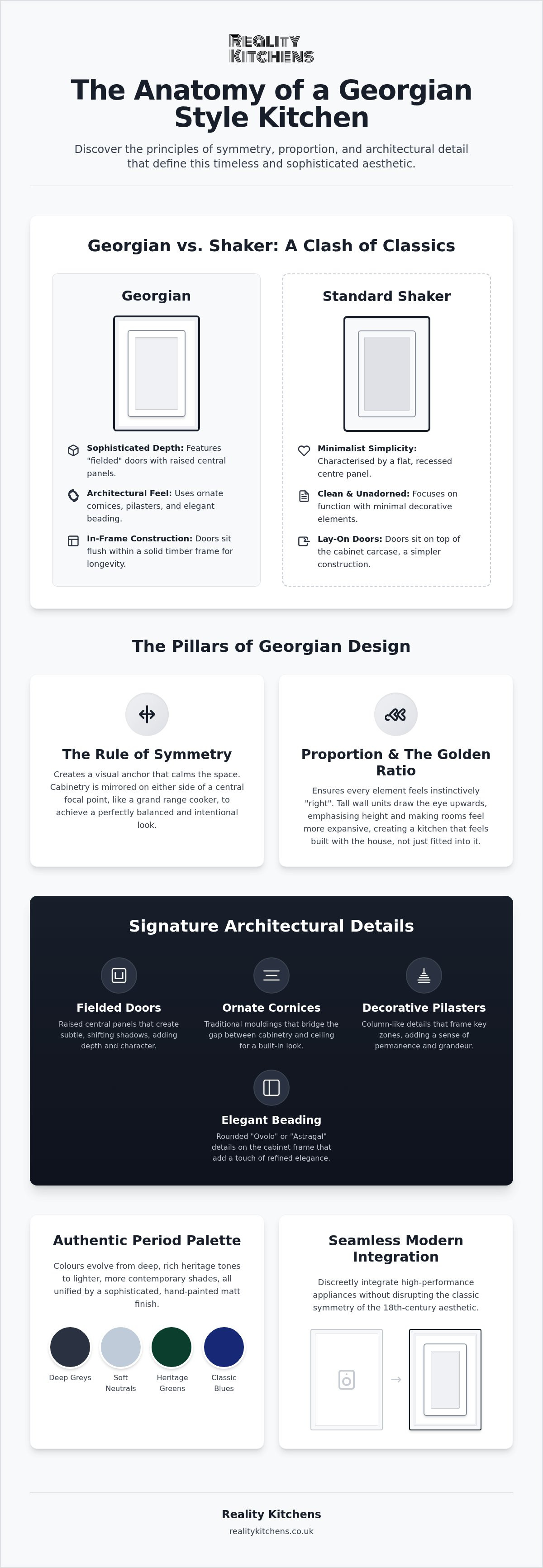
To achieve this, we look to the "Golden Ratio." This mathematical ratio ensures that every element, from the width of a cupboard to the placement of a handle, feels instinctively "right" to the human eye. It moves the design away from the cluttered feel of standard kitchens towards something more serene and intentional. It's about creating a space that feels established and calm, regardless of how busy your morning routine might be.
The Rule of Symmetry in Georgian Design
Symmetry is the cornerstone of any georgian style kitchen. It creates a visual anchor that immediately calms the space. A central focal point, often a grand range cooker or a bespoke chimney breast, serves as the starting point. From here, we "mirror" cabinetry on either side to create a balanced look. Even if your Cheshire home has non-rectangular rooms or awkward alcoves, symmetry is still achievable through clever planning.
- Use decorative pilasters to hide structural pillars or uneven walls.
- Balance a window on one side with a similar-sized pantry unit on the other.
- Ensure light fittings are centred perfectly over islands to maintain the vertical axis.
Proportion and Scale: Making Grandeur Practical
Grandeur doesn't have to mean "too big for the house." It's about using the available space intelligently. In many Altrincham terraces or Knutsford villas, we use tall wall units that extend towards the cornice to emphasise the room's height. This draws the eye upwards, making even modest footprints feel more expansive. Whilst large kitchen islands are a hallmark of the modern Georgian look, they must be balanced by enough peripheral floor space so the room doesn't feel cramped.
Georgian proportion is the relationship between cabinetry height and room volume. By getting this ratio correct, we ensure your bespoke kitchen feels like it was built with the house, rather than just fitted into it. This approach avoids the "museum" feel whilst delivering a kitchen that is both practical and prestigious. It ensures that your investment adds significant value to your property by respecting its original architectural integrity.
Key Architectural Elements of a Georgian Kitchen
Whilst Shaker styles focus on minimalism, a true georgian style kitchen introduces a sophisticated depth through "fielded" doors. These raised central panels, often finished with a delicate bevelled edge, create subtle shadows that shift as the light changes in your home. This layered look is further enhanced by ornate cornices and traditional mouldings that bridge the gap between your cabinetry and the ceiling. It's these intricate details that prevent the design from looking flat or overly modern, providing a sense of established luxury that adds significant value to Cheshire properties.
Historically, designers like William Kent: designing Georgian Britain influenced these interiors by bringing classical architectural motifs into the home. We use pilasters, which are decorative columns, to frame key zones like the range cooker or the sink area. This adds a sense of permanence and grandeur, making the cabinetry feel like part of the building's original skeleton rather than a temporary addition. It's a design language that feels both authoritative and welcoming.
Georgian Beading and Cabinetry Details
The primary differentiator in a bespoke Georgian design is the beading. Unlike the simple, square frames of a Shaker door, Georgian cabinetry often features an "ovolo" or "astragal" bead. This small, rounded detail adds a touch of elegance without being overly fussy. For an authentic finish, we always recommend "in-frame" construction. This means the doors sit inside a solid timber frame, a method that ensures longevity and a high-quality feel every time you open a cupboard. Choosing the right hardware is equally vital to finish the look.
- Aged brass cup handles: These offer a warm, lived-in feel that patinas beautifully over time.
- Pewter knobs: A more rustic, understated choice that suits late-period designs.
- Visible butt hinges: These are a hallmark of traditional craftsmanship and provide superior door support.
The Grand Mantel: A Georgian Centrepiece
No georgian style kitchen is complete without a grand mantel. This architectural feature creates a powerful focal point over the cooking area, mimicking the look of a traditional fireplace. By adding decorative corbels, we can provide extra support for a heavy shelf whilst introducing another layer of period detail. This isn't just about aesthetics; it's a practical way to house modern extraction systems whilst maintaining the room's classic symmetry. If you're ready to see how these elements could work in your home, you can explore our bespoke design process to begin your journey.
Achieving this level of detail requires a clear vision for your dream kitchen design. By focusing on these core architectural elements, we ensure your kitchen doesn't just look like a Georgian room; it feels like one. This thoughtful approach to cabinetry ensures your kitchen remains a timeless asset for decades to come.
Choosing the Georgian Palette: Colours and Materials
Selecting the right finish is where your georgian style kitchen truly begins to reflect your personality. The palette of this era was never static; it evolved from the heavy, dark pigments of the early 18th century to the light, airy pastels favoured in the late period. These shifts were heavily influenced by the principles of Georgian Architecture, which prioritised light and proportion. In a modern Cheshire home, we use these historical cues to create a space that feels grounded yet fresh. A flat matt finish is non-negotiable here. High-gloss surfaces can often look dated or overly industrial, whereas a soft, hand-painted matt finish absorbs light, highlighting the depth of your cabinetry's mouldings.
The latest 2026 design trends show a significant move away from sterile, high-gloss whites towards warmer, textured environments. By blending natural wood accents with hand-painted units, you create a prestige-meets-value look that feels both luxurious and lived-in. This tactile approach ensures your kitchen remains a comfortable social hub rather than a cold showroom piece. It's about using materials that look better with age, ensuring your investment stands the test of time.
Heritage Paint Finishes for Cheshire Homes
For homes in areas like Knutsford or Hale, we often recommend Heritage Bold tones. Sage Green offers a timeless connection to the garden, whilst Deep Navy provides a sophisticated, modern edge. If you're working with a smaller space in Bowdon, Stone Beige or off-whites can make the room feel expansive without feeling clinical. One effective technique is the monolithic look, where you paint your cabinetry, walls, and even the cornices in the same shade. This creates a seamless, architectural feel that emphasises the room's height. Hand-painted finishes are also a pragmatic choice. They're easy to touch up if life's little accidents happen, ensuring your bespoke kitchen stays pristine for decades.
Worktops and Flooring: The Foundation of the Look
Your worktop is the visual anchor of your georgian style kitchen, and natural stone is the gold standard for authenticity. Marble offers the classic veining seen in grand 18th-century estates, but high-quality Quartz is a brilliant, low-maintenance alternative for busy families. If you're unsure which material suits your lifestyle, our guide to kitchen worktops Northwich provides a detailed breakdown of durability and maintenance. To ground the design, consider flooring that adds texture. Large-format flagstones provide a sense of historic grandeur, whilst oak herringbone timber adds warmth and a sense of movement to the floor, perfectly complementing the symmetry of your cabinetry.
Integrating Modern Functionality into a Period Aesthetic
The most common reservation homeowners have is whether a georgian style kitchen can truly keep up with the demands of a modern household. It's a valid concern; the 18th-century kitchen was a space of manual toil, far removed from the high-tech social hubs we require today. However, the secret to a successful period design lies in the "Practical Visionary" approach. By using bespoke cabinetry as a sophisticated camouflage, we can house state-of-the-art technology within a shell of timeless elegance. You don't have to sacrifice your boiling water tap or high-speed oven to achieve a look that feels historically authentic.
In 2026, the trend has shifted decisively towards quiet, integrated appliances that blend into the architecture of the room. This move away from the "industrial" look of the early 2000s plays perfectly into the Georgian aesthetic. It's about removing visual clutter and noise to create a calmer, more productive environment. We focus on ensuring that every modern "must-have" has a dedicated, hidden home, allowing the symmetry of the room to remain the primary focus.
The Art of Integrated Appliances
Hiding large appliances is essential for maintaining the grand proportions of a Georgian room. Bespoke larders and tall pantry units are the perfect solution for housing integrated fridge-freezers or a vertical bank of ovens. This keeps the stainless steel and digital displays out of sight, only revealing them when they're in use. For the cooking zone, a modern induction hob can be set into a natural stone worktop within a traditional mantel setting, providing high-performance heat without the visual weight of a modern range. Bespoke cabinetry allows for seamless appliance integration without breaking symmetry. This ensures that even the most advanced kitchen tech feels like a natural part of the home's historic fabric.
Smart Storage in a Classic Shell
Whilst the exterior of your kitchen should look like a piece of fine furniture, the interior must work like a well-oiled machine. What appears to be a pair of traditional cupboards can actually be a set of deep, soft-close drawers designed to hold heavy cast-iron cookware. This makes accessing your equipment far easier than traditional shelving. We also utilise corner carousels and pull-out spice racks to ensure no space is wasted in your Cheshire home. The "Butler's Pantry" has seen a massive resurgence as a staple of modern design, providing a dedicated zone for coffee machines and toasters. This keeps your main worktops clear, preserving the clean lines and understated luxury of the space.
If you're ready to bridge the gap between historic charm and modern performance, you can view our bespoke kitchen components to see how we balance form and function. By focusing on these logistical details, we ensure your kitchen is a high-functioning asset that adds genuine value to your daily life and your property.
Bringing Your Georgian Style Kitchen to Life in Northwich
Designing a georgian style kitchen requires more than just a list of cabinets; it demands an intimate understanding of your home's unique light and architecture. Whilst high-end showrooms often promise luxury, their artificial lighting and generic layouts can never truly replicate how a specific paint colour or stone worktop will look in your Cheshire home. This is why we prioritise a home-based approach. By assessing your space in situ, we can ensure that the mathematical symmetry essential to this style is perfectly aligned with your windows, doors, and original period features.
One of the most significant advantages of our model is the removal of the "showroom premium." Traditional firms carry massive overheads that are inevitably passed on to the customer. By operating as a transparent expert without a physical storefront, we can deliver bespoke kitchen design Northwich residents trust for its high-quality craftsmanship at a far more realistic price point. It's a pragmatic way to achieve the grand, sophisticated look you desire without unnecessary inflation. You see the samples in the natural light of your own room, which is the only way to be certain of the final result.
The Reality Kitchens Design Process
Our journey begins by looking at the bones of your property. During our first visit, we don't just measure the walls; we assess the height of your cornices, the depth of your skirting boards, and the specific proportions of your room. This allows us to plan cabinetry that feels like a permanent architectural feature rather than a temporary addition. We collaborate with skilled local installers who understand the nuances of period homes in areas like Hartford and Weaverham. To give you complete peace of mind, every project is backed by our comprehensive ten-year guarantee, ensuring your investment is protected for the long term.
Why Local Expertise Matters
Cheshire is home to a diverse range of property types, from the Victorian terraces of Altrincham to the grand villas of Hale and Bowdon. Each requires a slightly different approach to Georgian design to ensure the result feels authentic. We pride ourselves on being a reliable local partner who navigates the complexities of sourcing and installation on your behalf. Our commitment is simple: to provide a luxury bespoke service that remains grounded and accessible. If you're ready to move from longing to action, you can contact Reality Kitchens for a home design visit today. Let's work together to create a space that adds significant value to your home and your lifestyle.
Your Vision for a Timeless Cheshire Heart of the Home
Creating a georgian style kitchen is about more than just choosing cabinets; it's about investing in a space that respects your home's history whilst serving your modern lifestyle. By focusing on the mathematical harmony of symmetry and the architectural depth of fielded panels, you can achieve a look that feels both grand and welcoming. We've explored how to hide high-tech appliances and choose a palette that enhances natural light, ensuring your kitchen remains a sophisticated social hub for decades.
At Reality Kitchens, we believe luxury should be accessible. By removing showroom overheads, we provide bespoke quality at realistic, showroom-free prices that add genuine value to your property. Our professional home-visit service across Cheshire ensures your design is tailored perfectly to your room's unique proportions. With a ten-year guarantee on all bespoke components, you can move forward with complete peace of mind. Book your bespoke home design consultation in Northwich today and take the first step towards a home that perfectly balances period elegance with practical innovation. We look forward to helping you bring your vision to life.
Frequently Asked Questions
What is the difference between Shaker and Georgian kitchen styles?
The primary difference lies in the level of architectural detail. Whilst Shaker kitchens focus on simple, flat-panelled frames, a georgian style kitchen features "fielded" doors with raised centre panels and intricate beading. Georgian design also prioritises strict mathematical symmetry and grand proportions, often incorporating ornate cornices and pilasters that Shaker styles omit. It's a shift from rural utility to high-society elegance.
Can I have a Georgian style kitchen in a modern new-build home?
Absolutely. A georgian style kitchen is an excellent way to introduce character and a sense of history into a "blank canvas" new-build property. By installing bespoke cabinetry with grand proportions, you can create the architectural interest that modern rooms often lack. We focus on establishing a central focal point, such as a chimney breast or large island, to anchor the room and provide the symmetry typical of 18th-century design.
What are the best colours for a Georgian style kitchen?
Classic Georgian palettes range from earthy early-period tones like deep forest greens to late-period pastels like duck egg blue and stone beige. In modern Cheshire homes, muted neutrals with a matt finish are incredibly popular for their ability to highlight cabinetry details without overwhelming the room. Using a single colour for both walls and units can also create a sophisticated, monolithic look that emphasises ceiling height.
Are Georgian kitchens more expensive than modern styles?
Bespoke Georgian designs often require a higher investment than off-the-shelf modern styles due to the complexity of "in-frame" construction and hand-painted finishes. However, they offer superior longevity and timeless appeal. Unlike trend-led modern kitchens that may look dated within a decade, the architectural principles of a Georgian design ensure it remains a prestigious asset that adds significant long-term value to your property.
How do I maintain hand-painted Georgian cabinetry?
Hand-painted cabinetry is surprisingly practical for busy households. For daily cleaning, a soft, damp microfibre cloth with a drop of mild detergent is all you need. You should avoid harsh chemical cleaners or abrasive pads that might dull the matt finish. The greatest benefit is that any minor scuffs or chips can be easily touched up with a small brush, keeping the kitchen looking pristine for decades.
Can I include a kitchen island in a Georgian design?
Yes, a kitchen island can be a stunning addition provided it respects the room's proportions. In a Georgian setting, the island should be positioned to maintain the room's central axis and symmetry. We often include architectural details like decorative corbels or pilasters on the island corners to ensure it feels like a piece of fine furniture rather than a modern block of units.
What type of handles should I use for a Georgian kitchen?
For an authentic look, aged brass or pewter hardware is the gold standard. Traditional cup handles are perfect for deep drawers, whilst simple round knobs suit cupboard doors. If you prefer a more contemporary twist on the period aesthetic, polished nickel offers a brighter, cleaner finish that still feels established. The key is to choose high-quality materials that will patina naturally over time.
How long does it take to design and install a bespoke Georgian kitchen?
A bespoke project typically takes between eight and twelve weeks from the initial design consultation to the final installation. This timeframe allows for the meticulous planning of symmetrical layouts and the hand-crafting of your unique cabinetry components. Whilst this is longer than a standard "flat-pack" installation, the result is a precision-engineered kitchen that is built to last for generations in your Cheshire home.


