

Why does a £60,000 bespoke kitchen often feel like a cold, clinical operating theatre the moment the sun goes down? You've likely spent months selecting the perfect worktops and cabinetry, yet the wrong glow can make even the finest materials look flat. It's easy to feel overwhelmed by smart tech and endless fitting options whilst trying to avoid a space that feels sterile or poorly lit for food prep.
This guide to kitchen lighting design ideas 2026 will show you how to bridge the gap between high-end luxury and everyday practicality. We'll explore the rise of human-centric biodynamic lighting, the return of organic materials like ceramic and linen, and the essential steps to layering light before your installation begins. You'll learn which trends offer genuine longevity and how to create a room that transitions effortlessly from a bright breakfast hub to a soft, inviting evening retreat. By understanding how to plan for the 15% of global electricity that lighting consumes, you'll ensure your Cheshire home is both sustainable and stunning.
Key Takeaways
- Master the latest kitchen lighting design ideas 2026, including biodynamic systems that mimic natural daylight to support your circadian rhythm and mood.
- Learn how to apply the three-layer rule of task, mood, and architectural illumination to zone open-plan spaces whilst avoiding a cold, flat look.
- Discover tailored strategies for different property types, from managing dark corners in period cottages to balancing glare in modern glass extensions.
- Understand why planning your lighting layout before cabinetry installation avoids costly mistakes and allows for superior hidden features.
- Find out how choosing a home-visit design model over a traditional showroom allows you to reinvest your budget directly into premium components.
Beyond the Bulb: Why Kitchen Lighting Design is the Heart of a Bespoke Home
Lighting is no longer just a finishing touch; it's a structural necessity that defines how you interact with your home. In 2026, the most sophisticated kitchen lighting design ideas 2026 focus on "invisible" sources. This means fixtures are tucked away, allowing the light itself to highlight the raw textures of fluted timber, honed stone worktops, and hand-finished cabinetry. When you invest in a bespoke kitchen design Northwich homeowners expect, the goal is to create a space that feels expansive during the day and intimate by night.
The emotional impact of a well-lit kitchen cannot be overstated. It's the difference between a room that feels like a sterile laboratory and one that feels like the soul of the house. For those who love to entertain, lighting serves as the invisible conductor of the evening's energy. It guides your guests from the vibrant atmosphere of the cooking island to the relaxed, soft glow of the dining area without a single word being spoken.
The Three Pillars of Kitchen Illumination
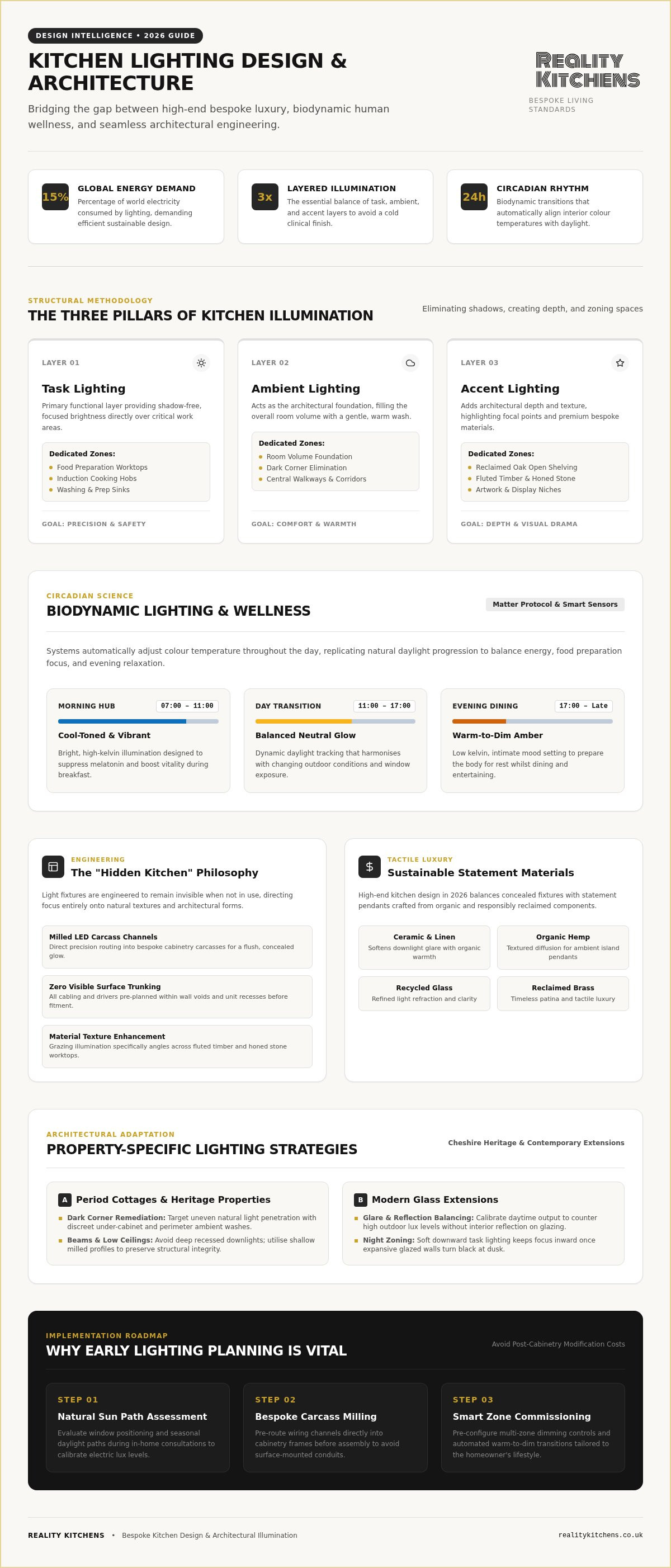
To achieve a professional result, we view lighting through three distinct lenses. Task lighting is your primary functional layer; it provides shadow-free, bright light exactly where you need it, such as over the induction hob or the sink. Ambient lighting acts as the room's foundation, filling the volume of the space with a warm, gentle wash that prevents dark corners. Finally, accent lighting adds the "wow" factor. This involves Architectural lighting design techniques to draw the eye to specific features, like a reclaimed oak shelf or a piece of local artwork, giving the room depth and character.
Why Lighting Must Be Planned During the Design Phase
The biggest mistake you can make is treating lighting as an afterthought. Waiting until the cabinets are being fitted to decide on your light points often leads to visible trunking, misplaced switches, or insufficient brightness in prep zones. By integrating your plan into the initial design phase, we can ensure every cable is hidden and every sensor is perfectly calibrated.
- Seamless Integration: Bespoke cabinetry allows us to mill channels for LED strips directly into the carcasses, providing a flush, high-end finish that off-the-shelf units can't match.
- Natural Light Assessment: Our home-visit model is vital here. We assess how natural light moves through your specific room in Northwich or Cheshire, ensuring your electric lighting complements the sun's path rather than fighting against it.
- Future-Proofing: Planning early allows us to integrate smart sensors and dimming zones that adapt to your lifestyle, ensuring your kitchen remains functional for years to come.
The 2026 Kitchen Lighting Trends: From Biodynamic LEDs to Sustainable Statement Pieces
The most influential kitchen lighting design ideas 2026 represent a departure from purely aesthetic choices. We're moving towards a "Hidden Kitchen" philosophy where lighting systems are designed to vanish when not in use. This minimalist approach is balanced by a surge in sustainable statement pieces. We're seeing fixtures crafted from organic hemp, recycled glass, and reclaimed brass, proving that high-end design doesn't have to come at the expense of the environment. It's about creating a space that feels grounded yet technologically advanced.
Biodynamic Lighting and Wellness in the Kitchen
Wellness is the driving force behind the rise of biodynamic lighting. These systems mimic the natural progression of daylight to support your circadian rhythm. In a luxury kitchen Cheshire homes often feature, this means bright, cool-toned light to boost energy during your morning coffee, transitioning automatically to a soft, amber glow as evening approaches. By using smart sensors and the latest Matter protocols, these colour temperatures adjust without you lifting a finger, helping your body prepare for rest whilst you enjoy dinner.
Warm-to-dim technology is essential for this transition. Unlike standard dimmers that simply lower the intensity of a white light, warm-to-dim bulbs shift the colour temperature as they fade. This creates that sought-after candlelit atmosphere that makes a bespoke space feel truly high-end. If you're unsure how these systems integrate with your layout, you can book a home design visit to see how different light temperatures interact with your specific room.
Sculptural Statements vs. Minimalist Integration
While many light sources are becoming invisible, the "jewellery" of the kitchen remains the pendant. In 2026, we're seeing a move towards oversized, artisanal shapes that act as a focal point over the island. These sculptural pieces often use natural materials to soften the hard surfaces of a kitchen. However, this is frequently contrasted with recessed linear lighting. This sleek, integrated approach is perfect for highlighting the clean, traditional lines of a bespoke shaker kitchen.
The choice of finish for these fixtures is critical. We recommend selecting metals or textures that complement your kitchen worktops Northwich stones often have unique veining that can be enhanced by the right light. A high Color Rendering Index (CRI) of 90 or above is now the standard for 2026, ensuring that the rich colours of your food and worktops look exactly as nature intended.
Layering for Luxury: How to Balance Task, Mood, and Architectural Lighting
The "Golden Rule" of high-end design is simple: never rely on a single central light source. A lone pendant in the middle of the room is the quickest way to make a bespoke space feel flat and uninspired. Instead, we use multiple circuits to create depth. This approach allows you to highlight the textures of your cabinetry whilst ensuring you aren't chopping vegetables in your own shadow. By spreading the load across different levels, you gain total control over the atmosphere of your home.
In 2026, this control extends to your technology. We often recommend syncing your lighting plan with the integrated kitchen appliances Northwich homeowners are currently favouring. Imagine your cabinet lighting automatically dipping when your smart oven signals that dinner is ready, or a subtle internal glow that activates only when you open a hidden coffee station. These small, thoughtful details are what separate a standard kitchen from a functional masterpiece.
Zone Lighting for Open-Plan Living
Large, open-plan homes in Cheshire present a unique challenge: light pollution. You don't want the bright, clinical light of a prep zone spilling into the dining area whilst you're trying to relax. We use low-hanging pendants to "ground" the kitchen island, creating a visual boundary that separates the workspace from the social space. To bridge the gap between the kitchen and the lounge, we integrate wall lights and even small table lamps on worktops. It brings a sense of living room comfort into the heart of the home, making the transition between zones feel natural rather than jarring.
The Technical Details: Colour Temperature and Lumens
Getting the technicals right is vital for success. For the most effective kitchen lighting design ideas 2026, we suggest a colour temperature between 2700K and 3000K. 2700K offers a traditional, warm amber glow, whilst 3000K provides a slightly crisper white that's perfect for task areas. It's about finding the "sweet spot" that feels clean but never cold.
- Lumens: You'll need roughly 700 to 800 lumens per square metre for worktops and hobs, but you can drop this significantly for dining areas.
- CRI (Colour Rendering Index): Always look for a CRI of 90 or above. This ensures that the vibrant colours of your food and your chosen materials look exactly as they should under artificial light.
- Dimmable Circuits: Ensure every layer is on a separate dimmer to allow for a seamless transition from a bright breakfast hub to a cozy evening retreat.
Lighting for Cheshire Homes: Tailoring Design to Your Property’s Character
Cheshire is a county defined by architectural diversity. A lighting plan that illuminates a low-ceilinged cottage in Tarporley will rarely suit a glass-fronted extension in Hale. To achieve a truly bespoke finish, your kitchen lighting design ideas 2026 must respect the specific bones of your building. Whether you're working with the original oak beams of a barn conversion or the soaring glass walls of a modern masterpiece, the goal is to enhance the property's character whilst introducing the latest smart home efficiencies.
Period Properties: Enhancing Traditional Features
Homes in Knutsford and Tarporley often come with unique challenges: dark corners, uneven walls, and low, beamed ceilings. The secret here is subtlety. We use discreet, small-aperture spotlights to highlight original brickwork or timber without cluttering the ceiling. It's about respecting heritage whilst adding modern functionality. For a Georgian or Victorian kitchen, we recommend choosing fixtures that look traditional but house high-efficacy LED internals. This gives you the aesthetic of a classic pendant with the flicker control and longevity expected in 2026. By avoiding bulky, modern fittings, you keep the focus on the room's historical soul.
Modern Extensions: Controlling Natural and Artificial Light
If you live in Hale or Bowdon, you've likely opted for a modern, glass-heavy extension. These sun-drenched rooms are beautiful, but they present two major lighting hurdles: glare and the "black mirror" effect. During the day, bright sunlight can bounce off polished floors and quartz worktops, making it difficult to work. We integrate automated shading systems that work in harmony with your lights, dimming or brightening based on real-time daylight levels.
At night, large glass windows can look like voids of blackness, which feels cold and exposing. We counter this by creating a "night-time view." This involves using exterior wash lighting on the garden or patio, which draws the eye past the glass and makes the kitchen feel part of the wider landscape. Inside, we use warm-to-dim technology to ensure the atmosphere remains cozy and private. If you want to see how these techniques would work in your specific space, you can book a personalised home design visit to assess your room's natural light patterns.
For those with vaulted ceilings or Cheshire barn conversions, the scale of the room requires a different approach. We use long-drop pendants to bring the light down to a human scale over the island, combined with powerful uplighting to celebrate the height of the rafters. This ensures the space feels grand but never cavernous or poorly lit.
The Reality Kitchens Approach: Integrating Lighting into Your Bespoke Design Journey
Most retailers treat illumination as an afterthought, forcing you to source fixtures from one supplier and cabinetry from another. We believe true luxury requires a unified approach. Our design process treats your layout and your light points as a single entity, ensuring your chosen kitchen lighting design ideas 2026 are baked directly into the blueprints. This integrated journey guarantees that your room is as functional as it is beautiful, with every detail tailored to your daily habits.
Peace of mind is central to our service. Because we control the process from the initial sketch to the final delivery of your kitchen components, we provide a ten-year guarantee on our components. We collaborate with trusted local tradespeople to ensure every wire is completely hidden within the carcasses and every switch sits in a logical, intuitive position. You won't have to navigate the complexities of installation alone; we guide the project to completion on your behalf.
From Inspiration to Installation
Your journey begins by translating your ideas into a technical reality. Whilst Pinterest boards are excellent for inspiration, seeing how materials behave in your own home is vital. Our home-visit model allows us to bring physical samples directly into your room, letting you see how a specific timber grain or paint finish looks under both natural Cheshire sunlight and targeted LED warmth. We then design a bespoke circuit plan that matches the architectural quirks of your space, working alongside local installers who understand our exacting standards.
A Realistic Price for Premium Design
Operating without an expensive physical showroom is a point of pride for us, and it offers a direct financial benefit to you. Traditional showroom overheads can inflate costs significantly. By cutting out the middleman, we can redirect that capital back into the project itself, lowering the overall bespoke kitchen cost Cheshire homeowners face whilst upgrading the specification of your lighting and appliances. This means premium features like warm-to-dim technology and custom-milled cabinet lighting become accessible within a realistic budget.
Bespoke design shouldn't mean unattainable pricing. By blending high-end craftsmanship with operational efficiency, we ensure your investment goes exactly where it matters: into the longevity and beauty of your home. Ready to illuminate your space? Book a home design visit with Reality Kitchens today and let us help you transform your space into a functional masterpiece.
Transforming Your Space with Light and Logic
Your kitchen isn't just a place to cook; it's a social hub that deserves to be seen in its best light. By embracing the most innovative kitchen lighting design ideas 2026 has to offer, you're investing in more than just fixtures. You're creating a wellness-focused environment that adapts to your natural rhythm and highlights the high-quality craftsmanship of your bespoke cabinetry. Whether you're respecting the heritage of a Knutsford cottage or accentuating a modern extension in Hale, the key lies in planning these layers before the first unit is installed.
At Reality Kitchens, we bridge the gap between high-end luxury and practical value. Our expert designers cover Northwich and Cheshire, visiting your home to ensure every shadow is accounted for. We skip the expensive showroom to offer you realistic prices for premium bespoke luxury, all backed by our ten-year guarantee on kitchen components. It's time to move from longing for a better space to taking action. Book Your Personalised Home Design Consultation today and discover how we can turn your vision into a functional masterpiece. Your dream kitchen is just one conversation away.
Frequently Asked Questions
What is the best colour temperature for kitchen lighting in 2026?
The best colour temperature for kitchen lighting design ideas 2026 remains between 2700K and 3000K. A 2700K bulb provides the classic, warm amber glow that makes Cheshire homes feel cozy in the winter months. For task areas like hobs and prep surfaces, 3000K offers a crisper, clearer white that aids visibility. By using warm-to-dim technology, you can enjoy the best of both worlds, transitioning from functional brightness to a soft evening atmosphere automatically.
How many lighting circuits should a bespoke kitchen have?
A well-designed bespoke kitchen should ideally have at least three to five separate lighting circuits. This allows you to control task lighting, ambient washes, and architectural accents independently. For open-plan living in areas like Hartford or Weaverham, having separate circuits for the island pendants and the dining area is essential. This granular control ensures you don't have to illuminate the whole room just to make a late-night cup of tea.
Can I integrate smart lighting into a traditional Shaker kitchen?
You can absolutely integrate smart lighting into a traditional Shaker kitchen without compromising its timeless aesthetic. The technology is housed within the switches, sensors, and the bulbs themselves, meaning the visible fixtures remain classic. We often design systems for period properties in Knutsford where the smart controls are completely hidden. This allows you to enjoy voice-activated scenes and automated dimming whilst maintaining the authentic, handcrafted look of your bespoke cabinetry.
What is the difference between warm-to-dim and standard dimmable LEDs?
Standard dimmable LEDs only reduce the intensity of the light, whilst warm-to-dim technology actually shifts the colour temperature as it fades. When you dim a standard bulb, the light can sometimes look grey or cold. Warm-to-dim bulbs mimic the behaviour of traditional incandescent lamps, shifting to a rich, golden hue as they are lowered. It's a vital feature for creating an intimate, candlelit feel for evening dining in your bespoke space.
How do I avoid shadows on my worktops whilst cooking?
To avoid shadows on your worktops, you must ensure your task lighting is positioned directly above the work surface rather than behind you. Placing spotlights or pendants too far back causes your body to block the light, casting a shadow exactly where you're trying to chop or prep. We recommend installing LED strips at the front edge of under-cabinet units. This ensures a clean, shadow-free wash of light across your premium worktops.
Are pendant lights over a kitchen island still in style for 2026?
Pendant lights over a kitchen island are very much in style for 2026, though the focus has shifted towards sculptural, artisanal designs. Rather than small, repetitive fittings, the trend is for one or two oversized statement pieces that act as a focal point. We're seeing a move towards organic textures like hand-blown glass or ceramic. These fixtures add a layer of personality to Cheshire homes, bridging the gap between functional lighting and decorative art.
How much should I budget for a full kitchen lighting scheme?
Budgeting for a lighting scheme depends on the scale of your project, but you'll gain more value by investing in quality over quantity. By choosing a design model that avoids showroom overheads, you can reallocate your budget towards premium, high-CRI components and smart integration. We focus on providing realistic prices for these high-spec systems. Every component we supply is backed by a ten-year guarantee, ensuring your investment in a luxury kitchen remains protected.
What is biodynamic lighting and do I need it in my kitchen?
Biodynamic lighting is a system that automatically adjusts its colour and intensity to mimic the natural sun cycle. Whilst not strictly "essential," it's a transformative addition for wellness-focused homes in Northwich. By providing cool, energising light in the morning and warm, sleep-promoting light at night, it supports your body's internal clock. It's particularly effective in kitchens that serve as the primary living space, helping to improve your overall mood and sleep quality.


