

What if the kitchen quote that looks most affordable leaves out costs you expected it to cover? A headline figure rarely tells the whole story when you’re planning a made-to-measure space. Knowing how to budget for a bespoke kitchen starts with understanding the full project scope, not just choosing cabinets and finishes.
Your budget needs to account for the choices that shape how your kitchen looks and works, from cabinetry, worktops and appliances to fitting, delivery and any changes to plumbing or electrics. Before committing, check what each quote includes, whether VAT is included and which figures are allowances rather than confirmed costs. This makes it easier to compare suppliers fairly and decide where to invest, and where a practical compromise will work.
This guide will help you set priorities, define the scope, build in a contingency and compare quotes on a like-for-like basis. A home visit from a designer, such as Reality Kitchens’ personalised approach, can help ground decisions in your room and requirements.
Key Takeaways
- Learn how to budget for a bespoke kitchen by setting priorities and defining the project scope before choosing finishes.
- Distinguish confirmed costs from provisional allowances and items a quote hasn’t covered.
- Compare options by practical factors such as function, durability and maintenance, not appearance alone.
- Keep unresolved choices and a personal contingency buffer visible to reduce the risk of changes derailing your plans.
- See how an in-home design visit can connect your kitchen brief with the room, layout and selections.
How to budget for a bespoke kitchen before you choose a design
A bespoke kitchen can make better use of your space and reflect how your household lives. But it’s difficult to plan spending when the brief is still “something modern” or “more storage”. Before browsing door finishes or comparing appliances, establish what the kitchen needs to do, what the room allows and which parts of the project your budget must cover.
A project budget sets out the work in scope, what each quote includes and the allowances for choices or costs that are not yet confirmed. This gives you a clearer basis for decisions and helps prevent an attractive design from expanding beyond your plans. If you’re starting with the basics, this overview of what is a fitted kitchen explains the built-in cabinetry concept behind fitted kitchens.
Set your kitchen priorities before requesting quotes
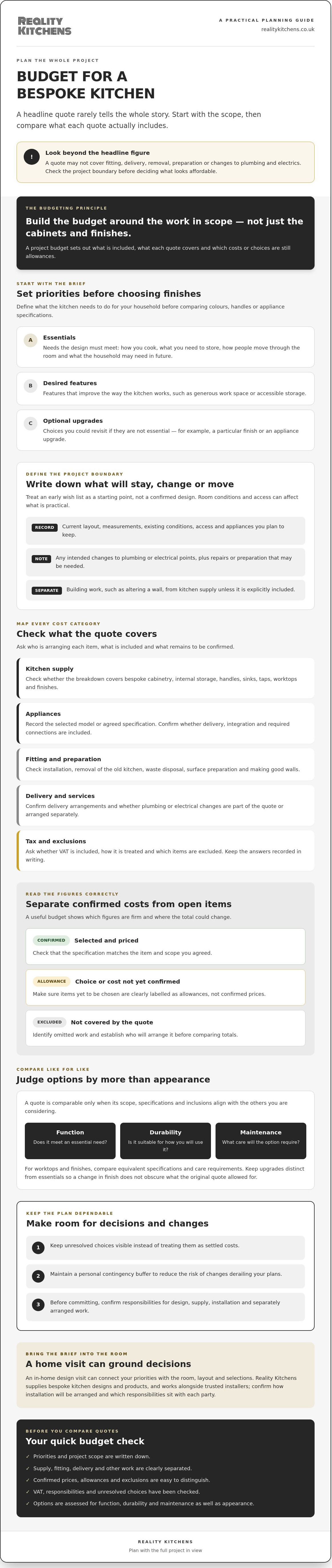
Write down your essentials, desired features and optional upgrades separately. Consider how you cook, what needs to be stored, how people move through the room and whether your household’s needs may change. Generous work space and accessible storage might matter more than a particular finish. Or an appliance upgrade might be central to how you use the kitchen.
Agree these priorities with everyone involved before comparing colours, handles or appliance specifications. You’ll then have a practical way to assess alternatives: does a choice meet an essential need, or is it an upgrade you could reconsider?
Write down the scope of your bespoke kitchen project
Record what will stay, change or move. Note the current layout, appliances you plan to keep and any intended changes to plumbing or electrical points. Measurements, access and existing conditions can also affect what’s practical, so treat an early wish list as a starting point, not a confirmed design.
Next, separate kitchen supply from other work. A quote for bespoke design and supplied components, worktops or appliances may not include fitting, removal of the old kitchen, repairs, preparation or changes to services. List each item and ask who is arranging it, what is included and what remains to be confirmed. If building work is needed, such as altering a wall, record it as separately arranged work rather than assuming it forms part of the kitchen supply.
Reality Kitchens supplies bespoke kitchen designs and products, and works alongside trusted installers. Confirm how installation will be arranged for your project and which responsibilities sit with each party. Its bespoke kitchen design and supply guide offers further context on the design and supply process.
With your priorities and project boundaries written down, you’re ready to explore how to budget for a bespoke kitchen on a like-for-like basis, rather than relying on a headline quote with an unclear scope.
What to include in a bespoke kitchen budget: each cost category explained
A useful budget shows more than a total. It separates selected and priced items from provisional allowances, assumptions and decisions still to be made. That distinction shows where the figure is dependable and where it could change. For an overview of items a renovation budget may cover, see this kitchen remodel cost breakdown, but use UK quotes and local project details to plan your own figures.
A quote is comparable only when its scope, specifications and inclusions align with the others you’re considering. Check that each supplier is pricing the same project boundary. Ask whether VAT is included, how it is treated and which items are excluded. Get the answers recorded in writing.
Separate units, worktops, appliances and finishing choices
Ask for a clear breakdown of the kitchen supply. It might cover cabinetry, internal storage, handles, sinks, taps, worktops and finishes. For appliances, record the selected model or agreed specification, and check whether delivery, integration and required connections are included. If an item is yet to be chosen, make sure its figure is labelled as an allowance rather than a confirmed price.
Worktop materials can differ in appearance, care requirements and specification. Compare equivalent options, including what the quoted supply covers, and explore the considerations in this premium kitchen worktops buying guide. Keep upgrades distinct from essentials, so a change in finish doesn’t obscure what the original quote allowed for.
Check fitting, preparation and project allowances
Installation and preparation may sit outside a supply quote. Confirm who is responsible for fitting, removing the existing kitchen, waste disposal, preparing surfaces and making good walls or floors. Ask whether electrical, plumbing or flooring work is included, excluded or needs a separate assessment. Structural changes should be scoped and priced by the appropriate provider, not assumed to be part of kitchen supply.
Unknown site conditions need investigating. If a wall, floor or service connection hasn’t been checked, record it as an open question rather than treating an allowance as a confirmed cost. A home assessment can help clarify the room and selections. You can discuss bespoke kitchen design and supply with Reality Kitchens as you work through what your project needs.
For how to budget for a bespoke kitchen with fewer surprises, build a comparison sheet with columns for category, specification, confirmed amount, allowance, VAT status, exclusions and outstanding questions. Resolve the biggest unknowns before comparing headline totals.
How to compare bespoke kitchen options without compromising your priorities
Once you’ve recorded each quote’s scope and inclusions, compare the choices within them, not just the totals. A lower figure may reflect a different specification, an unconfirmed allowance or an exclusion rather than better value for an equivalent kitchen. For each option, consider how it will work in your room, fit your household routines, what care it needs and whether the quote describes the same quantity and finish.
Decide where premium choices matter most to you
Start with the parts of the kitchen you’ll use most often. This could be a worktop used for daily food preparation, storage that makes cooking easier or an appliance suited to how you cook. Compare alternatives using documented specifications, care requirements and suitability for your routine. No material or appliance is best for every household: the right choice depends on how you’ll use it and what matters to you.
Keep choices that meet a genuine priority, then review lower-priority upgrades one at a time. If practical storage is essential but a particular handle finish is optional, ask what alternatives are available and how each affects the specification. This helps you make deliberate compromises without losing the features that led you to choose a bespoke design.
Spot unclear allowances and exclusions in quotes
Check that quotes identify products and quantities clearly, including finishes, appliance models or specifications, and assumptions about fitting. Ask what a provisional sum covers and whether substitutions are possible. Clarify delivery arrangements and whether additional work could be needed, rather than treating an unclear line as a confirmed inclusion.
A simple comparison table can turn these questions into a useful decision tool. Use columns for:
- Specification: the material, product, quantity or finish being compared.
- Allowance: any provisional amount and what it is intended to cover.
- Confirmed selection: the agreed choice, or mark it as undecided.
- Supplier: who is providing the item or work.
- Outstanding question: what needs clarification before you can compare.
Compare like with like. If one quote includes a specified appliance and another uses an allowance, ask for the second option to be clarified before judging the totals. Do the same for quantities, delivery, fitting assumptions and exclusions. For broader cost context in the region, see the bespoke kitchen cost guide for Cheshire.
This makes how to budget for a bespoke kitchen less about chasing the lowest headline figure and more about choosing a specification that fits your priorities, with fewer unanswered questions.
How to build a dependable kitchen budget and manage changes
A budget stays useful when it can accommodate decisions without letting the project drift. Set a working budget for the agreed scope, then decide separately how much flexibility you have for unresolved choices. A contingency is a personal planning buffer, not a guaranteed industry percentage. Choose an amount that reflects your circumstances and the uncertainties still to be checked, and keep it separate from money allocated to specified items.
For a home in Northwich or nearby Cheshire, base allowances on the actual room and project requirements, not a regional assumption. Existing services, measurements and site conditions can affect what needs attention. Where details are unknown, identify what needs assessing and who will confirm it before treating an allowance as reliable.
Use a simple sequence to finalise your budget
- Confirm the brief and boundaries. Check the room measurements, priorities and what the project includes, including any work supplied separately.
- Request itemised quotes. Ask for selections, allowances, exclusions and VAT treatment to be recorded clearly, so you can distinguish confirmed costs from open decisions.
- Resolve and document. Follow up open questions, compare equivalent scopes and record each approved change, including any effect on the quote or schedule.
This sequence turns how to budget for a bespoke kitchen into decisions you can check and update, rather than a single figure that becomes outdated as choices evolve.
Plan for decisions that may change during the project
Some selections depend on final measurements, a survey or input from the installer. Mark these as pending and identify who needs to confirm them. Prioritise choices that affect the layout or need to be settled early with the relevant supplier, rather than leaving every decision until the same point.
Keep a dated record of selections, approvals, quote revisions and responsibilities. If a proposed change affects the specification, ask for the revised details and any cost or schedule implications in writing before approving it. That way, everyone can work from the same version, and you can see whether the change fits your working budget or uses your separate flexibility limit.
A designer’s home visit can help ground early decisions in the room and your household brief. To discuss your bespoke kitchen design and supply requirements with Reality Kitchens, arrange a conversation about your kitchen plans.
Plan a bespoke kitchen budget with a designer who visits your home
A home design visit brings your plans back to the room itself. Rather than relying only on product browsing, a designer can learn how you use the kitchen, understand its layout and discuss the priorities behind your brief. That context helps make choices about bespoke design, components, worktops and appliances more relevant to your home and budget.
Reality Kitchens visits homeowners in Northwich and surrounding areas, and supplies bespoke kitchen designs, components, worktops and appliances. Its showroom-free model reduces showroom overheads, though it doesn’t guarantee a particular saving or price. An in-home discussion lets you talk through the space, scope and inclusions before settling on selections.
What to prepare for a home kitchen design visit
You don’t need a finished design. Bring what you have and note what you still need to decide. Useful preparation includes:
- Room measurements, photographs or existing plans, if available, plus any known constraints.
- Appliance preferences, essential features and ideas for colours, finishes or materials.
- Questions about the layout, storage or choices you haven’t settled.
- Your budget boundaries and a clear note of what you expect the kitchen supply to include.
Sharing how your household cooks, stores food and uses the room day to day can connect design decisions to real routines. If measurements or site details need confirmation, note that too, so assumptions aren’t mistaken for verified information.
Clarify the quote, guarantee and installation responsibilities
After discussing the brief, ask for a written specification identifying the products to be supplied, allowances, exclusions and decisions still outstanding. Check that selections match what you discussed, including the relevant components, worktops and appliances. If a detail is undecided, ask how it will be confirmed and whether it affects the quote.
Reality Kitchens states that supplied products are backed by a ten-year guarantee. Before relying on this, confirm which products are eligible, the terms and any exclusions. The business also works alongside trusted installers. Ask how they’ll be involved in your project and who is responsible for each task, including work arranged separately.
Taking these questions into a home visit can make it easier to work out how to budget for a bespoke kitchen around your actual room and requirements. If you’re planning a kitchen in Northwich or nearby, discuss your kitchen priorities and project scope with Reality Kitchens.
Turn your kitchen plans into confident next steps
A well-planned budget gives you more than a spending limit. It helps you protect the features that matter, understand what each quote covers and make considered decisions as the design takes shape. The practical approach to how to budget for a bespoke kitchen is to agree your priorities, check each quote against the same scope and keep undecided items visible until they’re confirmed.
A home visit can connect those plans to the room and your household’s needs. Reality Kitchens provides bespoke kitchen design and supplies components, worktops and premium appliances. Its showroom-free model is intended to reduce overheads, without guaranteeing a particular saving. The business also works alongside trusted installers, so clarify who is responsible for each task. If considering the stated ten-year guarantee, confirm which products are covered and check the terms and exclusions.
You don’t need every finish chosen before starting a useful conversation. Bring your priorities, budget boundaries and questions about what should be included. Talk through your bespoke kitchen plans with Reality Kitchens and take the next step towards a kitchen that fits your home and budget.
Frequently Asked Questions
How do I start budgeting for a bespoke kitchen?
Start with a written brief describing how you use the room, what needs to change and what can stay. Set a comfortable overall limit, then separate essential features from optional upgrades. To learn how to budget for a bespoke kitchen, ask suppliers for itemised quotes based on the same scope. Keep undecided selections visible, and clarify allowances, exclusions and responsibilities before comparing proposals or approving a design.
What should a bespoke kitchen quote include?
A useful quote identifies the specified units, worktops, appliances and components, with quantities, finishes and agreed installation arrangements. It should also state any allowances, exclusions, delivery assumptions and VAT treatment. Ask who is responsible for removal, preparation and related services. If an item is provisional or not included, have that recorded clearly. You can then compare proposals on an equivalent basis instead of relying on headline totals.
Should I budget separately for kitchen installation?
Yes. First check whether installation is included, arranged separately or outside the supplier’s scope. Confirm who handles fitting, removal, waste, preparation and making good. Electrical, plumbing or structural work may need separate assessment depending on the room and project. A kitchen supply quote doesn’t automatically cover these tasks, so ask for responsibilities and separate arrangements to be clarified in writing before committing.
How can I compare bespoke kitchen quotes fairly?
Compare the written specifications, not just the headline totals. Check that layout, quantities, product specifications, worktops, appliances, fitting assumptions and exclusions match. Identify provisional allowances and ask what could cause them to change. A comparison table can make differences easy to spot. If a quote is unclear, ask the supplier to explain or revise it before deciding, so you’re weighing like-for-like options.
How much contingency should I include in a bespoke kitchen budget?
There’s no single contingency figure that suits every project. Choose a planning buffer based on what’s known about your room and scope, and which decisions or work remain unresolved. Ask the relevant suppliers or tradespeople to assess uncertain items where possible. Keep your reserve separate from amounts already committed to specified choices, and don’t treat an unverified percentage as a guaranteed requirement.
Can I make a bespoke kitchen feel premium on a controlled budget?
Yes. Decide which features matter most to your household, then consider alternatives for lower-priority choices. Compare documented specifications, durability and care requirements rather than appearance alone. For example, you might keep a preferred storage solution while reviewing optional finish upgrades individually. Keep the scope clear and record changes before approving them. A designer can discuss options around your brief, but confirm selections and quote revisions in writing.
Does a home design visit help with kitchen budgeting?
Yes. A visit helps a designer understand your actual room, layout constraints and household needs. Reality Kitchens visits homeowners in Northwich, Hartford, Weaverham, Winnington, Davenham, Knutsford, Cranage, Goostrey, Holmes Chapel, Tarporley, Helsby, Frodsham, Sandiway, Cuddington, Comerbach, Altrincham, Hale, Bowdon and Ashley. Bring measurements if available, your priorities and budget boundaries. Ask what the proposal includes and clarify installation responsibilities.


