

The hob that feels most familiar isn’t automatically the one that suits your cooking best. The choice of induction hob vs gas hob cooking affects how heat responds, how you manage a simmer and which pans you can use. If you’re used to a visible flame or have a favourite set of cookware, it’s natural to wonder whether switching will feel like an upgrade or an adjustment.
This guide compares the everyday experience of both options, including heat control, cookware compatibility, cleaning and practical kitchen requirements. Think about the meals you make most often and the habits you rely on, then use those details to decide which hob is likely to suit you.
Your hob also needs to work with the worktop, layout and other appliances. Planning those elements together helps make the choice feel natural in the kitchen you’re creating.
Key Takeaways
- In induction hob vs gas hob cooking, the right choice depends on the heat response and visual feedback you prefer while preparing everyday meals.
- Match your hob to the techniques you use most, from gentle simmering to frying and moving pans between heat levels.
- Before choosing induction, check whether your existing pans are compatible using the cookware manufacturer’s guidance.
- Compare cleaning routines and consider whether you prefer adjusting hob settings or cooking over a visible flame.
- Plan the hob position, worktop and nearby appliances together so your choice fits naturally into the kitchen layout.
Induction Hob vs Gas Hob Cooking: What Is the Difference?
Are you drawn to the familiar sight of a blue flame beneath a pan, or to a smooth surface that heats compatible cookware without a burner flame? That’s the central difference in induction hob vs gas hob cooking: each transfers energy to the pan differently, affecting what you see and how you adjust the heat.
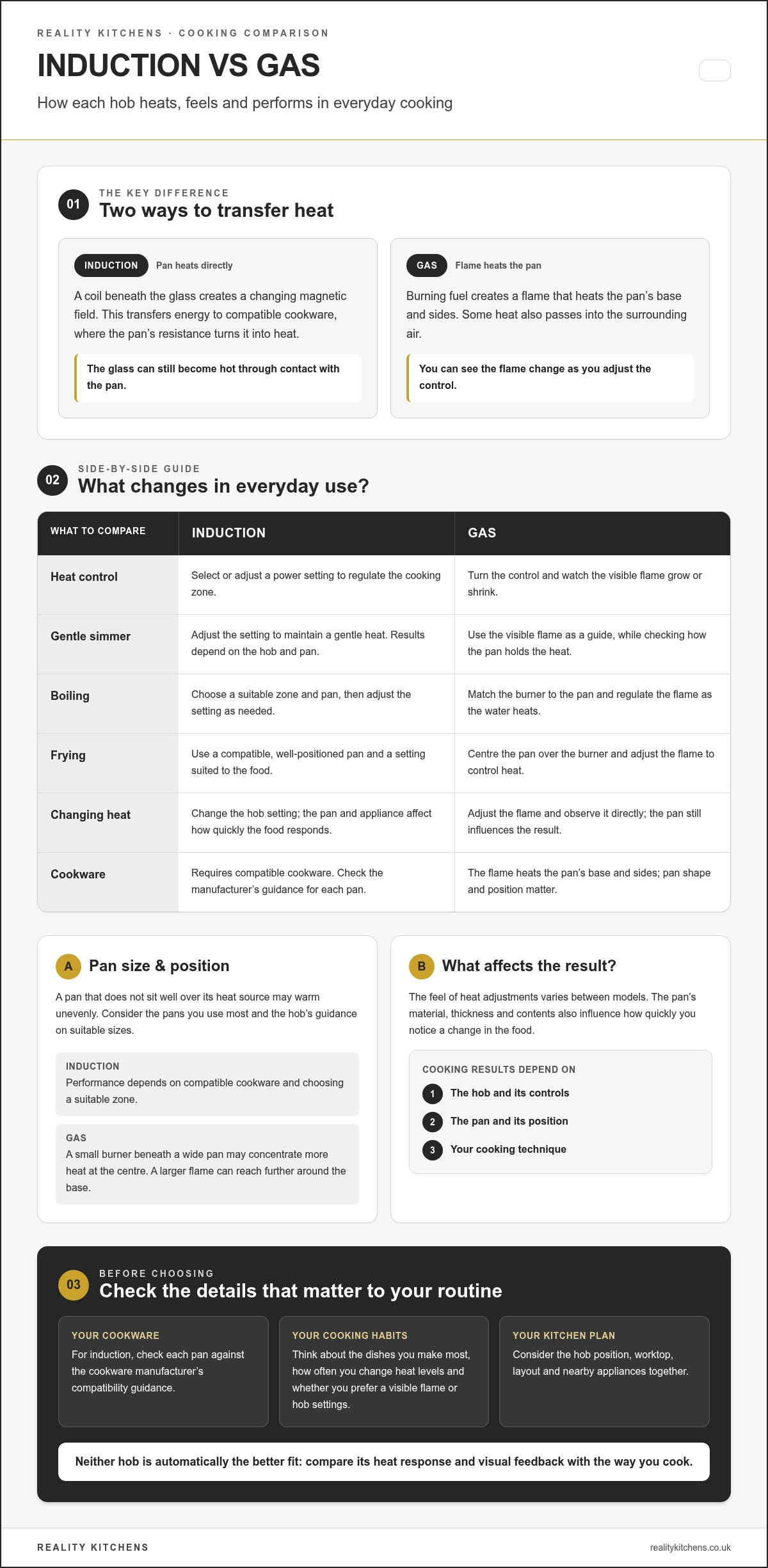
Induction uses electromagnetic energy to heat a compatible pan directly, whilst gas uses a burner flame to heat the pan and the surrounding air. Beneath an induction surface, a changing magnetic field transfers energy to suitable cookware. With gas, burning fuel produces a flame that makes contact with the pan.
The principles of induction cooking explain why the cookware itself is part of the heating process. Neither method suits every kitchen or routine. Understanding how each transfers heat is a useful first step in deciding which feels right for your cooking.
How induction hobs heat cookware
An induction zone works with a compatible pan placed over it. Beneath the glass surface, an electrical coil creates a changing magnetic field. This induces electrical currents in suitable cookware, and the pan’s resistance turns that energy into heat. In practical terms, the pan heats directly rather than being warmed by a flame beneath it. The glass can still become hot through contact with the pan, so it isn’t a heat-free surface.
Not every pan will work. Before choosing induction, check the cookware manufacturer’s compatibility guidance for each pan you plan to use. This is particularly useful if you have a well-loved set or rely on one pan for a regular dish. Checking your cookware first helps you work out whether you can keep using it or need to choose different pans.
How gas hobs cook with a flame
On a gas hob, a burner releases fuel that ignites to form a flame. The flame transfers heat to the base and sides of the pan, while some heat also passes into the surrounding air. You can see the flame change as you adjust the control, giving immediate visual feedback about the burner setting. That response may feel intuitive if you’re accustomed to cooking over a flame.
Heat distribution depends partly on the relationship between the burner and the pan. A burner that’s small relative to a wide pan may concentrate more heat beneath its centre, whilst a larger flame can reach further around the base. Pan shape and position matter too. Centre the pan over the burner to help the flame heat it more evenly.
Think about what these differences mean for your own habits. If you often move between gentle and stronger heat, consider how each hob’s controls feel in everyday use. Picture the pan you reach for most: induction transfers energy through compatible cookware, whilst gas applies heat from a visible flame. That distinction is a useful starting point for comparing control, cookware and kitchen needs.
Induction vs Gas Cooking: How Control and Heat Feel in Everyday Use
The difference becomes more personal when you adjust the heat. A gas hob gives you a visible flame to watch as you turn the control; an induction hob uses settings to regulate the cooking zone. Neither experience is automatically easier. Your preference may depend on how you judge heat, how often you change levels and how the particular hob handles those adjustments.
Temperature adjustment, simmering and responsiveness
With gas, you can see the flame grow or shrink as you turn the control. With induction, you select or adjust a power setting, and the hob changes how it heats the pan. Both approaches can support a range of cooking tasks, but the feel of the adjustment varies between models. If you often make a delicate sauce, check how the appliance manages sustained low heat instead of assuming either type will always simmer more steadily.
There can also be a difference between changing a setting and noticing its effect in the food. The pan’s material, thickness and contents all influence that experience. Check the manufacturer’s specifications and instructions for both hob and cookware, especially if you regularly move between high and low heat.
Boiling, frying and using different pan sizes
For boiling, you might bring a pan of water up to heat, then reduce the setting once it reaches a boil. For frying, steady contact between the pan base and heat source can help you manage browning. The table gives a practical comparison, not a promise of identical results across appliances.
| Cooking task | Induction | Gas |
|---|---|---|
| Simmering | Adjust the setting to maintain a gentle heat; results depend on the hob and pan. | Use the visible flame as a guide, while checking how the pan holds the heat. |
| Boiling | Choose a suitable zone and pan, then adjust the setting as needed. | Match the burner to the pan and regulate the flame as the water heats. |
| Frying | Use a compatible, well-positioned pan and the setting suited to the food. | Centre the pan over the burner and adjust the flame to control heat. |
| Changing heat levels | Change the hob setting; the pan and appliance affect how quickly the food responds. | Adjust the flame and observe it directly; the pan still influences the result. |
Zone or burner size matters, particularly with a wide pan or when cooking a larger quantity. A pan that doesn’t sit well over the heat source may warm unevenly, so consider the pans you use most and the hob’s guidance on suitable sizes. Induction performance depends on compatible cookware, while gas results vary with burner design and flame adjustment.
Cooking results depend on the hob, the pan and your technique working together. To compare induction hob vs gas hob cooking, picture your usual dishes and the control style you find comfortable. As you plan the wider layout, bespoke kitchen design can bring hob position, worktop and neighbouring appliances into the same decision.
Induction Hob vs Gas Hob: Compare Cookware, Cleaning, and Kitchen Needs
The everyday differences go beyond adjusting the heat. Your existing pans, preferred cleaning routine and kitchen services can all influence which hob is the more straightforward fit. Before choosing, consider what you already own and what the planned kitchen can accommodate.
Cookware compatibility and changing your pans
Induction needs cookware containing ferromagnetic material, which responds to the hob’s magnetic field. Some pans work with induction and others don’t, even if they look similar. Check the instructions from both the hob and pan manufacturers rather than assuming a whole set is compatible. If you plan to keep your current pans, assess them individually before settling on an appliance.
Gas doesn’t rely on magnetic cookware, so it can suit a wider variety of pan materials. However, not every pan shape suits every burner. A small pan on a large burner, or an unusually broad base on a compact burner, may not receive heat as intended. Follow the appliance guidance and consider the sizes and shapes you use most often.
Cleaning, ventilation and household considerations
A flat induction surface has fewer raised parts around the cooking zones, so spills on the glass can often be reached directly when the hob is cool. The surface still needs care: use the cleaning products and methods recommended by its manufacturer to avoid damage. On a gas hob, pan supports and some burner components can be removed for cleaning according to the appliance instructions. Their shape and joints may need more attention when food or grease collects around them.
There are practical installation differences too. Induction needs an appropriate electrical supply, while a gas hob needs a suitable gas connection and installation. Requirements depend on the chosen appliance and the kitchen, so include them in the design rather than leaving them until the end. Have the relevant services assessed by a suitably qualified professional; don’t attempt installation or alterations yourself.
Gas cooking produces combustion products, so suitable ventilation is an important part of planning a gas hob. Requirements vary with the appliance and installation. Use the manufacturer’s instructions and applicable UK guidance to determine what your kitchen needs, rather than relying on a general rule of thumb.
Use this quick check to make the comparison practical:
- Cookware: Identify the pans you want to keep, then check their compatibility with the hob you’re considering.
- Cleaning: Decide whether a smooth surface or removable supports and burner parts better suit your routine.
- Kitchen services: Include the relevant electrical or gas supply and ventilation needs in the layout and installation plan.
There isn’t one winning option for every household. With induction hob vs gas hob cooking, the useful question is whether the cookware, maintenance and installation needs fit your habits and kitchen plans. Consider these alongside your worktop and appliance choices to help make the finished kitchen cohesive and straightforward to use.
Which Hob Suits Your Cooking? A Practical Induction-or-Gas Decision Guide
There’s no single winner for every kitchen. Start with the meals you actually cook, then separate personal preferences from practical installation requirements. Work through these steps before choosing a hob.
- Start with your usual meals. Think about what appears on your table most often: gently simmered sauces, high-heat frying, quick boiling or several dishes cooking at once. The tasks you repeat regularly matter more than an occasional recipe.
- Consider your preferred control style. Do you find a visible flame reassuring and familiar, or would you rather use settings on a flat surface? Picture making a small adjustment while cooking, not just looking at the hob when it’s off.
- Factor in your pans and cleaning routine. List the cookware you’d like to keep and check its compatibility with the specific hob under consideration. Then consider whether you prefer a flat surface or are comfortable cleaning pan supports and burner parts.
- Check the kitchen requirements separately. Worktop space, appliance position, electrical supply, gas connection and ventilation can affect what suits the room. Assess these as practical constraints rather than assuming one hob type is best.
Match the hob to your cooking routine
If you often make a sauce that needs gentle attention, consider how you’ll maintain a low setting. For high-heat frying, think about how you control heat beneath your regular pan. If several pans are usually on the go, compare the layout and usable cooking zones or burners with the sizes of your cookware. Familiarity matters too: a flame offers visible feedback, whilst induction relies on selected settings. Review the controls and manufacturer information for the actual models you’re considering rather than relying on general assumptions.
Check the existing kitchen and installation requirements
Next, look at the room. Consider where the hob will sit in relation to worktop space, preparation areas and nearby appliances, and whether your preferred pan sizes suit the proposed layout. Gas and electrical requirements depend on the home and chosen appliance; ventilation matters for gas too. Use current manufacturer instructions and relevant qualified installation guidance to assess the practicalities. Don’t make assumptions about service or installation requirements.
Bring both parts of the decision together: the way you like to cook and what the kitchen can accommodate. That’s a more reliable basis for choosing than assuming induction or gas is best for every home. Reality Kitchens can help you plan a hob as part of a bespoke kitchen, considering your cooking routine alongside the worktop, layout and other appliances. Plan your bespoke kitchen around the way you cook.
Plan Your Induction or Gas Hob Around a Bespoke Kitchen
Once you’ve weighed up how each hob cooks, bring the decision into the room itself. Your preferred cooking style matters, as do the kitchen’s existing services, available worktop and position of neighbouring appliances. Planning these details together can help either an induction or gas hob feel like a natural part of the finished kitchen.
Coordinate the hob with worktops and appliance layout
Start with the hob’s actual dimensions and the clearances specified by its manufacturer. These affect where it can sit in the worktop and how it relates to cupboards, walls and nearby appliances. Don’t choose a position on appearance alone: you’ll also want practical space for preparing ingredients and setting down pans.
Think about the sequence of everyday tasks. A hob placed near useful preparation space can make cooking feel more direct, whilst the position of an oven or other appliances may influence how you move around the kitchen. Worktop choice belongs in the plan too. Consider the material, cut-outs and how surfaces meet the hob alongside the appliance instructions. If you’re comparing finishes and practical considerations, explore a guide to premium kitchen worktops in Northwich.
Nearby appliances need room to fit and function as intended. Their dimensions, door movement and manufacturer-stated clearances can all affect the layout. A guide to integrated kitchen appliances in Northwich can help you consider how appliances work together rather than treating each purchase as a separate decision.
Turn your preferred cooking style into a kitchen plan
A home visit connects the choice to the actual room: its proportions, existing services and the way you use the kitchen day to day. Talk through the meals you make, the pans you reach for and whether you prefer flame controls or induction settings. These details help shape an appliance choice around your routine, rather than asking you to adapt your cooking to a layout planned without you.
Reality Kitchens brings bespoke kitchen design and appliance supply together, considering the hob as part of the whole project. The home-visit design service takes your space and requirements into account, helping coordinate appliance position with worktops, storage and the wider layout. For more on planning a kitchen around your home, see the bespoke kitchen design guide for Northwich and surrounding areas.
Ultimately, induction hob vs gas hob cooking isn’t a contest with one answer for every household. The right choice suits your cooking habits and works with the kitchen’s practical requirements. If you’re planning a new space, discuss a bespoke kitchen design shaped around how you cook, so the hob and the rest of the room are planned together.
Make Your Next Kitchen Decision With Confidence
Your hob choice can be the starting point for a kitchen that feels considered from the first meal to the last pan put away. Think beyond the appliance itself: picture how you move between preparation, cooking and serving, and what would make those everyday moments easier. This wider view gives the induction hob vs gas hob cooking decision a clear purpose without asking you to change habits that already work for you.
Reality Kitchens can help turn that preference into a plan through personalised design visits in your home, with kitchen appliances and components supplied as part of a bespoke project. Trusted installers work alongside the team to deliver the finished kitchen in your space.
Ready to shape a kitchen around the way you cook? Plan a kitchen around the way you cook with Reality Kitchens and take the next step towards a space that feels naturally yours.
Frequently Asked Questions
Is induction cooking better than gas cooking?
Neither is better for every cook; the right choice depends on your routine and priorities. You might value induction’s controlled settings for weekday meals, for example, but prefer the visual reassurance of a flame when cooking by instinct. Compare the specific hob models you’re considering, including their controls and instructions. The best fit in induction hob vs gas hob cooking is the one that works with your habits, pans and kitchen.
Can you use any pan on an induction hob?
No, an induction hob needs pans with a base that responds to its magnetic field. Some stainless-steel pans are suitable, whilst others aren’t; cast iron is often compatible, but the individual pan’s instructions are the reliable guide. A magnet sticking to the base can be a useful first check, but don’t treat it as a substitute for manufacturer guidance. Also check that the pan’s base is in good condition and sits steadily.
Does a gas hob need electricity to work?
It depends on the hob. Some models use electricity for electronic ignition, controls or other functions, whilst others may allow manual lighting if the manufacturer’s instructions permit it. Don’t assume a gas hob will operate normally during a power cut. Check the appliance manual for its specific requirements and safe operating instructions, including whether it can be lit without electrical power. Never improvise a method the manufacturer doesn’t describe.
What happens to an induction hob during a power cut?
An induction hob needs electricity to heat pans, so it won’t cook during a power cut. Don’t try to connect it to an improvised power source or use it in a way its instructions don’t support. If you’re part-way through cooking, move food only when it’s safe to do so and remember that the pan and cooking surface may remain hot. Check the hob manual for its indicator behaviour and outage guidance.
Can you replace a gas hob with an induction hob without changing the whole kitchen?
Often, yes; replacing a hob doesn’t automatically mean replacing the whole kitchen. The new appliance’s dimensions, worktop opening, electrical supply and existing gas connection all need assessing, and the worktop must suit the installation. Homeowners in Northwich, Hartford, Weaverham, Winnington, Davenham, Knutsford, Cranage, Goostrey, Holmes Chapel, Tarporley, Helsby, Frodsham, Sandiway, Cuddington, Comerbach, Altrincham, Hale, Bowdon and Ashley can plan these details with Reality Kitchens’ home-visit design service.
Is an induction hob noisy when cooking?
It can make some operating sounds, though the type and volume vary between appliances and cookware. You may hear a fan, a light hum or a higher-pitched sound, particularly at certain settings; the pan can affect what you hear. That doesn’t necessarily indicate a fault. If sound matters to you, review the manufacturer’s information for the model and consider how its controls and features suit your kitchen routine.
Does induction cooking taste different from gas cooking?
The hob itself doesn’t give food a different flavour; taste is shaped more by ingredients, temperature and technique. You may notice a difference in how you approach a dish, especially if you’re used to flame-based techniques or judging heat visually. For instance, browning depends on the pan, food and heat management, not simply the hob type. Allow yourself time to get familiar with a new appliance’s controls and recommended cookware.


