

What if the best measure of a kitchen’s value isn’t what it might add to your home’s resale price, but how well it works for you every day? If you’re asking, “is a bespoke kitchen worth the investment?”, weigh the appeal of a design shaped around your home against the higher initial outlay and how long you expect to live with it.
A tailored kitchen can account for awkward corners, storage needs and household routines from the start. But bespoke isn’t automatically the right choice for every home or budget, and claims about long-term value deserve a clear-eyed look. It also helps to understand the difference between bespoke, made-to-measure and standard kitchens.
This guide compares those options and explains how to judge whether the everyday benefits are likely to justify the cost for your household. We’ll look at room fit, practical trade-offs and resale expectations, so you can decide based on how you live rather than promises of a financial return. Reality Kitchens’ in-home design visits help connect your choices to your actual space and routines.
Key Takeaways
- Answer “is a bespoke kitchen worth the investment” by weighing its fit, everyday usefulness and overall project scope, not resale promises alone.
- Consider how a tailored layout could improve movement, preparation and storage in your kitchen.
- Compare bespoke, made-to-measure and standard kitchens by flexibility, room fit and design input, not just by their labels.
- Use a practical checklist to clarify your household’s needs, room constraints, plans and priorities before deciding.
- See how an in-home design visit can connect your requirements with bespoke design, components, appliances and worktops.
Is a bespoke kitchen worth the investment for your home?
A bespoke kitchen is a substantial decision, not an automatic upgrade. It’s worth considering when the design fits your room, makes everyday tasks easier and delivers a quality you value as part of a well-planned project. Look at what is included, too. Cabinetry alone won’t show whether the full design meets your needs.
Resale appeal may matter, but it’s uncertain. A future buyer’s taste and priorities may differ from yours, so don’t treat a bespoke kitchen as a guaranteed financial return. A more reliable test is whether its benefits will matter while you live with it. If standard options leave important needs unmet, bespoke design may be worthwhile. If they already suit your room and household, extra tailoring may add little practical value.
What does bespoke mean compared with made-to-measure?
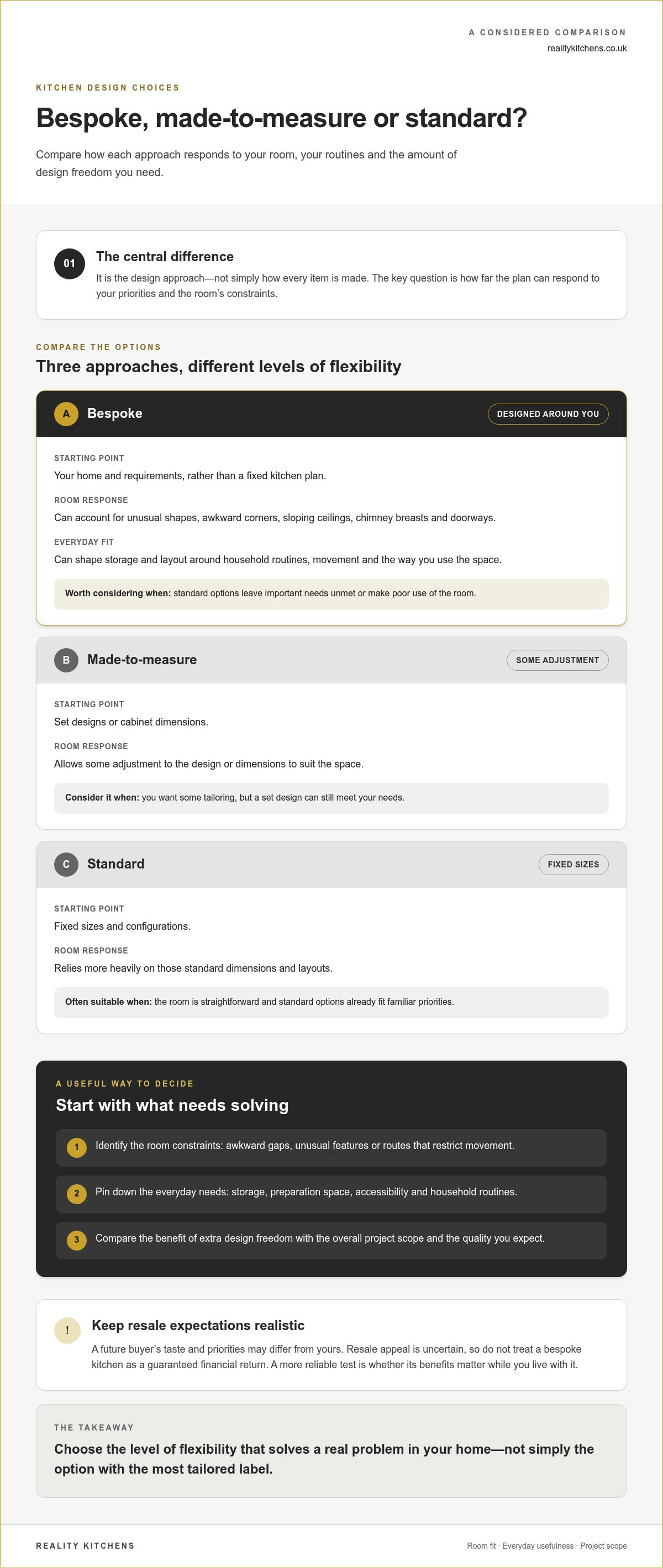
Bespoke design starts with your home and requirements, rather than asking you to begin with a fixed kitchen plan. It can take account of an unusual room shape, how you use the space and the storage you need. Made-to-measure kitchens generally allow some adjustment to set designs or cabinet dimensions, while standard kitchens rely more heavily on fixed sizes and configurations.
The distinction is about the design approach, not necessarily how every item is made. A bespoke kitchen doesn’t have to mean every component is manufactured from scratch. The important question is how far the plan can respond to your priorities and the room’s constraints. For general context on how kitchen layouts combine practical needs and design choices, see this overview of the history and design of kitchens.
Who is most likely to benefit from a bespoke kitchen?
Tailoring can be especially useful when standard layouts leave awkward gaps, restrict movement or make poor use of available storage. For example, a room with a chimney breast, sloping ceiling or unusual doorway may need a considered layout to make the space work as a whole. A household that cooks together, needs accessible storage or uses the kitchen for more than meal preparation may also benefit from a plan shaped around its routines.
How long you expect to stay matters. If you plan to remain in your home for years, improvements you experience daily may count for more than uncertain resale appeal. If you’re planning a move soon, consider whether the extra design freedom solves a clear need or mainly reflects personal preference.
There’s no disadvantage in choosing a simpler option when it fits. Standard kitchens may be entirely suitable for a straightforward room and familiar priorities. Identify what a tailored plan would solve, then compare that benefit with the project scope and the quality you expect. The answer to “is a bespoke kitchen worth the investment” depends on the difference it makes to your home and daily life, not the label alone.
Where a bespoke kitchen creates lasting everyday value
A kitchen earns its value through how well it works after the excitement of a new design has passed. Long-term kitchen value combines daily function, lasting quality and a good fit for your home. That’s a more useful measure than appearance alone or assumptions about what a future buyer might pay.
How a tailored layout can improve everyday routines
Start with the points in your current kitchen that cause friction. Do two people regularly need to use the same narrow route? Are pans stored far from the hob, or everyday items on shelves that are difficult to reach? A thoughtful plan can place preparation space, storage and appliances around how your household cooks. If you often prepare meals together, for instance, the layout could provide separate work areas and clearer routes past one another.
Room proportions matter as much as routines. An in-home assessment can take account of doorways, windows, existing features and the space available when cupboards or appliances are open. This grounds design decisions in the actual room rather than a plan viewed in isolation. It can help inform where storage belongs and how people move through the space, although no layout can promise that every task will take less time.
Reality Kitchens’ in-home bespoke kitchen design brings those practical conversations into the room being redesigned. Think about how your household uses the kitchen at different times of day, not only how you’d like it to look in a photograph.
How materials and components affect long-term value
Material choices involve different considerations. Durability is about how well a surface or component stands up to the use you expect. Upkeep means understanding the cleaning and care it needs. Appearance is personal: a finish you enjoy seeing each day can make the room feel more like yours, but that enjoyment isn’t an objective financial return.
Be realistic about household habits. A busy cooking space may call for surfaces suited to frequent use and manageable upkeep, while a household that cooks less may place more weight on a particular look or feel. The right balance depends on your priorities, not on choosing the most premium option in every category.
Assess worktops, appliances and kitchen components as parts of one project. A surface needs to suit how you prepare food and clean; an appliance should match the way you cook; and storage components should serve the items you use. Looking at each choice in context helps you judge whether the overall specification is coherent, rather than letting one attractive feature dominate the decision.
Reality Kitchens’ supplied kitchen components are backed by a ten-year guarantee. This applies to those components, not automatically to every part of the finished kitchen. So, is a bespoke kitchen worth the investment? Its everyday value is strongest when the layout, materials and components meet needs you genuinely have.
Bespoke, made-to-measure or standard: compare the real trade-offs
Kitchen labels aren’t used consistently by every supplier, so focus on what is actually tailored: the overall design, cabinet dimensions, storage choices, finishes and how the plan responds to your room. A made-to-measure option may adapt standard units, while a bespoke design may allow more decisions to be shaped around your requirements. Neither label alone tells you the quality or full scope of a kitchen.
| Option | Design flexibility | Room fit | Input and complexity |
|---|---|---|---|
| Standard | Choices are largely based on set ranges and configurations. | Works best when the room suits available cabinet sizes and layouts. | Fewer decisions can make planning more straightforward. |
| Made-to-measure | Some dimensions or details can be adjusted within an established design system. | Can help address particular measurements, though the extent of adaptation varies. | Offers a middle ground, with more choices than standard but defined parameters. |
| Bespoke | The plan can be shaped more closely around the room and your brief. | May accommodate unusual proportions, features or specific storage needs. | Greater personal input can mean more decisions to make and coordinate. |
The best route depends on the gap between standard options and your household’s needs. If available cabinet sizes suit a straightforward room and provide the storage and work areas you need, a standard kitchen may be sensible. A simpler specification can keep decisions focused without making the result inherently lower in quality or less suitable.
When standard or made-to-measure may be enough
Check whether the available layouts solve the practical problems in your room. If units fit without awkward leftover spaces and the arrangement supports how you cook, extra flexibility may not offer enough benefit to justify more design decisions. Made-to-measure can help when a limited adjustment makes a workable plan fit more comfortably, without needing every element to be individually tailored.
When bespoke flexibility can make a meaningful difference
Bespoke design becomes more valuable when standard configurations leave a clear compromise. That might be a narrow alcove that would otherwise be underused, storage that needs to suit particular equipment, or a brief that calls for a more unified arrangement around existing room features. Tailoring may help these choices work together, though the result depends on the home and agreed design.
To compare options fairly, describe the same room, requirements and included components for each. Then note what is fixed, what can change and which unmet need each adjustment addresses. This helps you judge whether extra flexibility solves a real problem or simply adds choices. If you’re considering a tailored plan, Reality Kitchens’ bespoke kitchen design offers a way to explore how your requirements could shape the design.
A practical checklist for deciding whether bespoke is worth it
A clear decision starts with your household’s priorities, then tests the proposed design against the whole project. Work through these questions before choosing a kitchen type. Your answers can show whether bespoke flexibility addresses a real need or whether a simpler option would do the job.
Five questions to test the investment against your priorities
- What frustrates you now? Name specific problems, such as hard-to-reach storage, crowded preparation space or routes that become awkward when more than one person is cooking. Prioritise the issues a new design should solve.
- What constraints does the room create? Note features that affect the layout, including doorways, windows, alcoves and existing services. Decide whether standard sizes can work around them without leaving compromises you care about.
- How long do you expect to use this home? If you plan to stay for years, everyday comfort may carry more weight. If a move is likely sooner, consider whether extra tailoring solves a pressing need rather than simply reflecting personal preference.
- Which choices are essential? Separate must-haves, such as accessible storage or a particular appliance arrangement, from flexible details and features chosen mainly for appearance. This makes it easier to focus the design brief.
- What matters most overall? Rank practical function, materials, appearance and project simplicity. Be honest about which benefits you’ll notice regularly and which are attractive but less important to your household.
How to assess project scope without relying on promises
Compare the same project elements, not just headline figures or labels such as “bespoke” and “premium”. Record what each proposal includes and excludes, then check whether the specifications are genuinely comparable.
- Design: note the planning and design work included, and how much the layout responds to your room.
- Components: compare the cabinetry and storage specified, including any tailored details.
- Appliances: list which appliances are included and whether their functions suit your routines.
- Worktops: compare the proposed material and finish, as well as the amount included.
- Installation arrangements: establish whether installation is part of the proposal or arranged separately, and record any stated exclusions.
Keep personal value separate from possible resale value. A kitchen that makes daily life more comfortable may be worthwhile to you, but future buyer interest is uncertain, not a guaranteed financial return. Avoid relying on an assumed increase in sale price to make the sums work. For deeper budget planning, use the bespoke kitchen cost guide alongside your like-for-like project comparison.
If you’re ready to turn your priorities into a tailored brief, explore bespoke kitchen design with Reality Kitchens.
How Reality Kitchens makes bespoke design a considered investment
A tailored kitchen should begin with the room and the people who use it, not assumptions about what every home needs. For homeowners in Knutsford and surrounding Cheshire areas, a home design visit gives you the chance to discuss your priorities in the space being redesigned. It also grounds choices in the room’s proportions and existing features, making the conversation practical from the outset.
Designing around your home and household
Bring the priorities you identified earlier: what frustrates you now, what storage you need, how you use the kitchen and which features matter most. Discussing these at home connects the brief to the actual layout, rather than considering choices in isolation. Reality Kitchens uses these conversations to shape bespoke kitchen design around your home and requirements, helping you focus on changes that address genuine needs.
That might mean exploring how to use a difficult corner, where everyday items should sit, or how work areas relate to the room’s entrances and windows. A home visit won’t make every design choice automatic, but it gives you a grounded starting point for weighing options. You can also explore how bespoke kitchen design in Northwich can respond to the character of the home and the way its household lives.
Reality Kitchens supplies kitchen components, appliances and worktops as part of its bespoke offering. Considering these together helps you weigh the whole specification: how storage, cooking equipment and work surfaces support your routines, and where a simpler choice may be enough. Its model avoids physical showroom overheads, helping make premium bespoke kitchens available at realistic prices.
A clear next step for a considered kitchen investment
Keep the scope clear as the design takes shape. Note what is included in the proposed components, appliances and worktops, and how installation is arranged. Reality Kitchens works alongside trusted installers, and its supplied kitchen components are backed by a ten-year guarantee. The guarantee applies to those components, not every element of the completed kitchen or installation arrangements.
The question “is a bespoke kitchen worth the investment?” comes down to the fit between the design and your priorities. A home-centred discussion can help you see whether tailored choices solve meaningful problems and where standard or simpler options may be enough. There’s no need to decide based on resale predictions or a premium label alone. Focus on what the design needs to do for your household, then consider the project as a whole.
If you’re considering a bespoke kitchen in Knutsford or the surrounding Cheshire area, explore Reality Kitchens’ home design service and discuss the priorities you’d like your new kitchen to meet.
Take the next step with confidence
The decision doesn’t need to hinge on whether bespoke sounds more impressive. Ask whether the choices you’re considering solve real problems in your home and feel worthwhile for the years you expect to use the kitchen. That’s the clearest way to answer “is a bespoke kitchen worth the investment” for your household, without relying on uncertain resale predictions.
As you move from ideas to a practical plan, keep the full picture in view: the design, supplied components, appliances, worktops and installation arrangements. Reality Kitchens’ home visits connect your requirements to your actual space. Its no-showroom model supports access to premium options at realistic prices. Trusted installers are part of the process, and supplied components have a ten-year guarantee. That guarantee should not be taken to cover every part of the finished kitchen.
If a tailored design could make your kitchen work better for the way you live, take a considered first step. Explore bespoke kitchen design with Reality Kitchens and begin shaping a space that suits your home and plans.
Frequently Asked Questions
Does a bespoke kitchen always add value to a property?
No, a bespoke kitchen doesn’t guarantee a higher sale price. Its effect depends on the property, the kitchen’s condition and what prospective buyers want. A carefully planned room may help a home feel well cared for, but a highly personal layout or finish won’t suit everyone. If selling is a priority, consider whether your choices will appeal beyond your own household, and avoid treating possible resale interest as a certain return.
Is a bespoke kitchen worth it if I may move house soon?
It can be, if it solves a problem you’re experiencing now, but a short time horizon may make extensive customisation harder to justify. Focus on changes that improve function and present the kitchen well, rather than adding features mainly for personal enjoyment that you may not use for long. Compare the overall scope with a simpler alternative, and make your decision based on the benefit you’ll get before moving, not a predicted sale-price increase.
How long does a bespoke kitchen last?
There isn’t one reliable lifespan for every bespoke kitchen. Longevity depends on the quality and suitability of its components, how heavily the room is used, and how well surfaces and fittings are maintained. Water leaks, heat, wear and neglected repairs can affect condition over time. When assessing a design, think beyond its initial appearance: consider whether its materials suit your household’s habits and whether the finishes will be practical to care for.
Can a bespoke kitchen work in a small room?
Yes. A small kitchen can benefit from a plan that makes careful use of its available space, although bespoke design can’t increase the room’s physical size. A designer might consider where doors open, which cupboards are easiest to reach and how to keep preparation areas usable. Be clear about what you store and use regularly; planning around those needs can help prevent scarce space being taken up by features that add little value.
Can I keep my existing appliances in a new bespoke kitchen?
Often, yes, provided the appliances are suitable for the new layout and remain in good working order. Before finalising the design, note their dimensions, how they fit into the cabinetry and any ventilation or connection requirements. Also consider their age and whether you expect them to serve your household for the foreseeable future. Keeping an appliance you like may help focus the project, but the layout should accommodate it safely and sensibly.
What does a ten-year kitchen guarantee usually cover?
Guarantee cover varies, so read the terms for the specific supplied items rather than assuming it applies to the whole finished kitchen. Reality Kitchens’ ten-year guarantee applies to supplied kitchen components, not automatically to appliances, worktops, installation or every part of a project. Reality Kitchens serves homeowners in Northwich, Hartford, Weaverham, Winnington, Davenham, Knutsford, Cranage, Goostrey, Holmes Chapel, Tarporley, Helsby, Frodsham, Sandiway, Cuddington, Comerbach, Altrincham, Hale, Bowdon and Ashley.


