

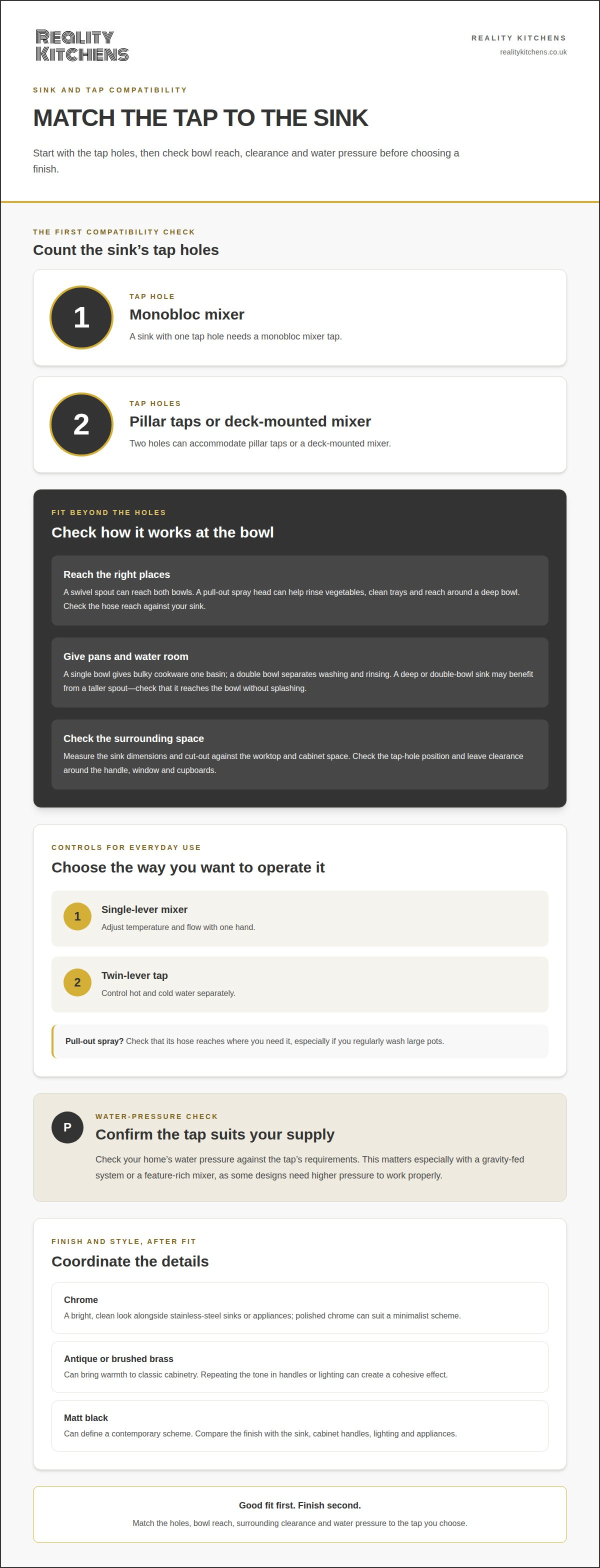
A beautiful tap can still be the wrong choice if it does not suit your sink. Choosing the right kitchen sink and tap means matching the tap to the sink’s tap holes, bowl size and layout, then checking that it works with your water pressure. A sink with one tap hole needs a monobloc mixer tap; two holes can accommodate pillar taps or a deck-mounted mixer.
It is easy to focus on finish and shape first, but everyday comfort depends just as much on practical fit. The right combination should leave room to wash large pans, reach both bowls in a double sink and operate the handle without it hitting a window or cupboard.
This guide explains how to compare tap types and styles, match a tap to your sink and assess water-pressure compatibility before deciding. Use these checks to choose a design that looks considered and feels dependable in daily use.
Key Takeaways
- Compare single-lever, twin-lever and pull-out designs by how you use your sink, then consider whether antique brass suits your kitchen’s traditional or modern look.
- Weigh tap materials and finishes for their appearance and everyday practicality, and coordinate the finish with your sink and other kitchen details.
- Match the tap’s height, reach and mounting style to the sink’s holes, bowls and surrounding space to make everyday tasks more comfortable.
- Check your home’s water pressure against the tap’s requirements, especially if you have a gravity-fed system or are considering a feature-rich design.
What are the different types of kitchen taps?
When choosing the right kitchen sink and tap, match the tap’s controls and reach to your bowl layout and everyday tasks. A single bowl gives bulky cookware one basin; a double bowl separates washing and rinsing. In a compact kitchen, consider how the sink and tap will affect your remaining worktop space.
- Choose controls and spray features for your routine. Single-lever mixer taps adjust temperature and flow with one hand; twin-lever taps control hot and cold separately. A pull-out spray head helps rinse vegetables, clean trays and reach around a deep bowl. Check its hose reach against your sink before choosing, especially if you wash large pots regularly.
- Match the sink material to your use and preferred look. Stainless steel, composite granite, ceramic and fireclay each offer a distinct appearance and care routine. Stainless steel suits a practical, easy-to-clean kitchen; composite granite, ceramic and fireclay bring different finishes and visual character. Consider how the material will fit your cleaning habits and overall design.
- Coordinate antique brass with the kitchen’s character. Antique brass can complement classic cabinetry and warm details, or create contrast in a modern room with simple fronts. Repeat its tone in handles or lighting for a cohesive effect. Chrome taps offer a bright, clean look alongside stainless-steel sinks or appliances, while matt black can define a contemporary scheme.
- Check tap height and sink fit. A deep or double-bowl sink may benefit from a taller spout; confirm it reaches the bowl without splashing. Measure the sink’s overall dimensions and cut-out against the worktop and cabinet space. For choosing the right kitchen sink and tap, also check the tap-hole position and nearby window or cupboard clearance.
- Plan installation and cost together. UK plumbing requirements depend on the connections and tap design; boiling-water models also have an electrical unit, so follow their installation requirements. Sink, tap, worktop alterations and fitting affect the project total. The cost depends on the chosen combination and is set out after a quote request.
How do I choose a kitchen tap?
Stainless steel is a practical sink choice for durability and easy maintenance; composite granite, ceramic and fireclay offer different looks and care needs. Cost varies with the material, size and specification. When choosing the right kitchen sink and tap, weigh the sink’s practical requirements alongside the tap’s material and finish.
-
Review tap materials and finishes
Stainless steel, brass and chrome are popular choices for kitchen mixer taps. Stainless-steel-finished taps are durable, easy to clean and resistant to heat, stains and scratches. Brass adds warmth, while chrome has a bright, reflective appearance. Other finishes include nickel, bronze, copper and graphite effects. Read the care guidance for your chosen finish, especially if you want to avoid frequent polishing.
-
Match the finish to kitchen design
Choose a finish that complements the kitchen’s palette rather than competing with it. Polished chrome can suit a minimalist scheme; antique or brushed brass can bring warmth to classic cabinetry. Matt black creates contrast in a contemporary room. Compare cabinet handles, lighting and appliances together. Repeating a metal tone can create a cohesive look, while a considered contrast adds depth without making the details feel disconnected.
-
Coordinate tap and sink finishes
Compare the tap with the sink itself, not only with a colour sample. Chrome can brighten a composite sink, while chrome or brushed steel can coordinate with stainless steel. For a cohesive pairing, consider the sink’s tone and surface alongside nearby metal details. Choosing the right kitchen sink and tap means balancing appearance with care needs, so think about how each material fits your household’s cleaning routine.
-
Consider brushed finishes and bridge taps
A brushed finish adds subtle texture beside polished metal; repeating brushed details across handles and appliances can tie the look together. Check how the tones appear under your kitchen lighting. A bridge tap, with two handles joined by a central bar, can suit a traditional design. Before choosing one, consider the space its separate controls need and how its shape relates to the sink and worktop.
Bespoke kitchen design can help bring these finish and material choices together in a coordinated kitchen plan.
What kitchen tap style should I go for?
Choose a style that suits the room and the tasks you do at the sink. Then check that its mounting requirements match your sink and worktop.
-
Match the tap style to the kitchen
Start with the kitchen’s overall design, then choose a tap shape that belongs in it. A chrome mixer tap with clean lines can suit a contemporary scheme, while traditional cabinetry may pair better with a bridge design. Check nearby handles, lighting and appliances for clashing shapes or finishes. Leave enough clearance around the spout and lever, especially beneath wall cupboards or beside a window.
-
Choose a mixer tap
Match the spout to your usual sink tasks. A swivel spout can reach both bowls, while a pull-out spray head helps rinse vegetables and clean a large tray. Compare the spout’s height and reach with the bowl so water lands inside rather than splashing onto the worktop. If you are considering a feature-rich mixer tap, check water pressure too, as some designs need higher pressure to work properly.
-
Consider the installation style
Check where the tap can be mounted before settling on its shape. A sink without tap holes may suit a tap mounted on the worktop behind it, provided there is enough space and clearance below for the fittings. For a replacement, measure the sink’s width and depth, the existing cut-out, tap-hole position and cabinet space. Compare these measurements with the new sink and tap specifications before planning worktop changes.
Inset sinks sit in the worktop, undermount sinks fit beneath it, and Belfast sinks have a deep basin with an exposed front. Each requires different preparation, so worktop and cabinet requirements can affect the overall fitting cost. The total also depends on your sink and tap choices, any alterations and installation. A project quote can set out the costs.
Checking water pressure and tap compatibility
A standard pre-drilled sink tap hole is 35 mm; most mixer taps need 0.5 to 1 bar minimum and work best between 1 and 5 bar. Common issues include weak flow from an incompatible tap or limescale in the aerator, which can cause splashing.
-
Check water pressure requirements
Find out whether your home uses a gravity-fed system, often supplied by a cold-water tank in the loft, or another arrangement. Gravity-fed pressure can be as low as 0.1 to 0.5 bar, below the minimum for many mixer taps. Compare your supply with the tap’s stated requirements before selecting it. Some pull-out or feature-rich designs need around 2 bar, so check those specifications carefully.
-
Confirm tap compatibility
Match the tap’s minimum pressure requirement to your actual supply, not just its appearance or functions. An unsuitable model on a low-pressure system can deliver poor hot-water flow or fail to work properly. Pillar taps draw hot and cold water separately, each with its own pressure; a mixer combines the supplies. Check the tap-hole size and mounting position too, so the chosen model fits the sink or worktop.
-
Consider filtered-water requirements.
A filter tap can remove impurities while leaving beneficial minerals in drinking water. Check its temperature limits and cartridge requirements alongside the main tap’s pressure needs. Many compatible filters function only with water temperatures up to 80°C, and cartridges need replacing every 6-12 months. If you’re planning a filtered-water feature as part of a wider kitchen update, explore bespoke kitchen design to bring the components together.
-
Check the aerator and water flow.
Taps with built-in aerators or flow regulators use less water, making them useful features to compare. Limescale can collect in an aerator and weaken or disrupt the stream. If water starts splashing, inspect the aerator; it can be cleaned or replaced separately. A suitable tap balances the pressure available with the flow you need for rinsing and everyday use.
Reality Kitchens: Bespoke Kitchen Design
Reality Kitchens can bring your sink and tap decisions into a wider plan through its bespoke kitchen design service. This is useful when planning a new kitchen or coordinating the sink, tap, worktops and other components as part of one design. Considering these choices together helps you see how the finish, layout and practical needs work with your appliances and worktops, rather than treating the tap as an isolated detail.
Reality Kitchens supplies kitchen components, appliances and worktops to support your design. During a home visit, share your plans and the details that matter to your household, such as bowl layout, preferred tap style and available worktop space.
Contact Reality Kitchens to discuss your kitchen design.
Shape a kitchen that feels considered
Picture how you want the whole room to work, not just how one feature should look. Think about where you prepare food, how you move between tasks and what would make everyday routines easier. These priorities help shape a design that feels personal and practical.
Reality Kitchens offers Bespoke Kitchen Design, Kitchen Components and Kitchen Appliances to help bring your plans together. If you are reworking your kitchen, consider how the sink and tap can sit naturally within the wider layout and complement the choices around them.
A clear sense of your priorities makes it easier to turn inspiration into a kitchen suited to your home. For a considered next step, contact Reality Kitchens about your kitchen and start shaping a space that works for you.
Frequently Asked Questions
What type of tap is best for the kitchen?
A mixer tap is a versatile choice if you want hot and cold water from one spout. The best design depends on how you use the sink: a pull-out spray can help wash awkward cookware, while separate controls may suit someone who prefers to adjust hot and cold independently. Start with your daily routine, then narrow the options by sink layout and water supply.
Deck-mounted or wall-mounted: how do you decide?
Choose deck-mounted fittings if your sink or worktop has a suitable tap position and the connections below are accessible. Wall-mounted taps can leave the surface clearer, but the pipework must reach the wall at the right height and position. Changing between mounting types can involve plumbing work and opening the wall, so it is usually more practical during a full kitchen renovation.
Do I need a plumber to fit a new kitchen tap, or can I do it myself?
You can replace a tap yourself if you are confident shutting off the water, accessing the connections and fitting the new model securely. A professional can remove and fit a standard kitchen tap in around thirty minutes. Choose a plumber if the pipework needs altering, isolation valves are difficult to operate or you are unsure how to prevent leaks. Always check carefully for leaks after fitting.
How long should a kitchen tap last, and when should you repair rather than replace it?
A tap’s working life depends on its build quality, water conditions, frequency of use and maintenance. Repair is often sensible when a drip or stiff lever is caused by a worn cartridge, which can often be replaced without changing the whole tap. Consider replacement if the body is damaged, corrosion affects its structure or repeated faults make repairs impractical.
What is the best material for a tap?
Stainless steel is a practical choice if you value straightforward cleaning and resistance to heat, stains and scratches. Brass and chrome are also popular: brass brings a warmer appearance, while chrome reflects light. Compare the tap’s material and finish with how often you use the sink, the care it needs and the look you want. The best option balances everyday demands with your kitchen’s design.
Which kitchen tap types and features are best, including mixer, pull-out and boiling-water taps?
Choose a mixer for convenient everyday use, a pull-out spray for flexible rinsing, or a boiling-water tap if instant boiling water and less kettle clutter suit your routine. Boiling-water models have different servicing and filter schedules, ranging from every six months to every five years depending on the model. Check ongoing care needs alongside the tap’s functions before deciding which features belong in your kitchen.


