

What if the most expensive part of your new kitchen isn't the hand-painted cabinetry or the quartz worktops, but the questions you forgot to ask? We understand that the journey from a dated room to a bespoke culinary sanctuary often feels daunting. You likely worry about hidden fees, "cowboy" installers, or paying a premium just to cover a firm's expensive showroom rent. It's a common anxiety for homeowners in Northwich and across Cheshire who want luxury without the inflated price tag.
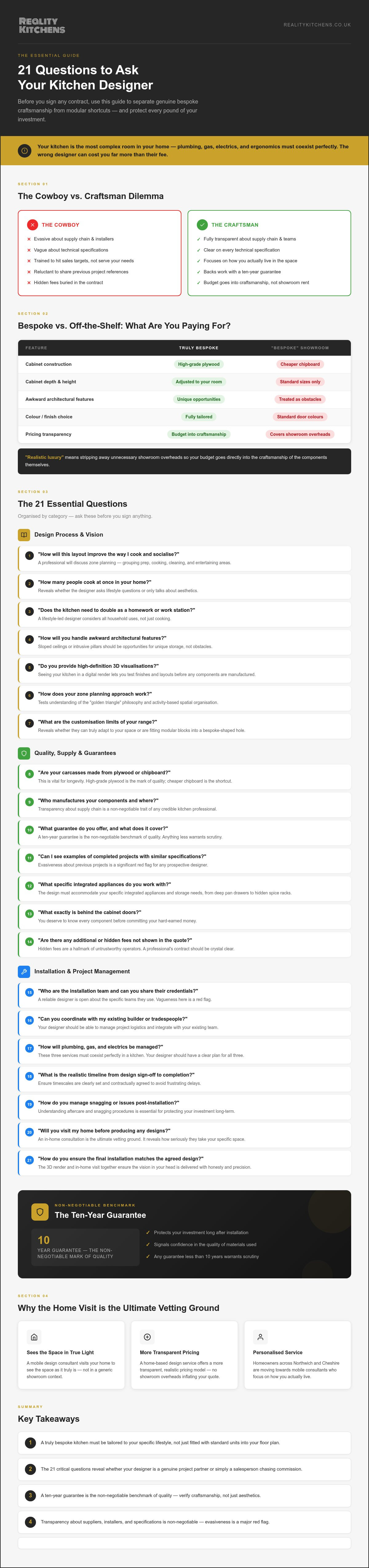
By the end of this guide, you'll have total clarity on the 21 essential questions to ask a kitchen designer before you sign any contract. We'll show you how to distinguish between true bespoke quality and modular shortcuts, whilst ensuring your investment is protected by a ten-year guarantee. We'll also explore why a home-based design service can offer a more transparent, realistic pricing model than any high-street shop, giving you the peace of mind that your vision will be delivered with honesty and precision.
Key Takeaways
- Learn why a truly bespoke kitchen must be tailored to your specific lifestyle rather than just fitting standard units into your floor plan.
- Discover the 21 critical questions to ask a kitchen designer to reveal if they are a genuine project partner or simply a salesperson.
- Understand how to verify the craftsmanship of your components and why a ten-year guarantee is a non-negotiable mark of quality.
- Gain the confidence to manage project logistics, including how your designer should coordinate with local installers or existing builders.
- Realise why an in-home design consultation is the ultimate vetting ground for achieving a high-end finish without paying for showroom overheads.
Why Vetting Your Kitchen Designer is Critical for Your Home
Your kitchen is likely the most complex room in your home. It isn't just a collection of cupboards; it's a sophisticated hub where plumbing, gas, electrics, and ergonomics must coexist perfectly. Because of this complexity, the person you choose to lead the project becomes your most important partner. Whilst high-street brands often rely on sales staff trained to hit monthly targets, a dedicated designer focuses on how you actually live. In Northwich and across Cheshire, homeowners are moving away from the "one-size-fits-all" showroom model in favour of mobile design consultants who can see the space in its true light and offer a more personalised service.
The "Cowboy" vs. "Craftsman" Dilemma
Spotting the difference between a professional and a "cowboy" installer starts with their level of transparency. A reliable designer will be open about their supply chain and the specific teams they use for installation. If they evade questions about their previous projects or seem vague about technical specifications, consider it a significant red flag.
A professional kitchen designer is a practical visionary who balances aesthetics with structural reality.
By preparing the right questions to ask a kitchen designer, you shift the power balance from the seller to you. This ensures that every pound spent contributes to a lasting result rather than just a quick commission for a salesperson. Transparency regarding suppliers and installers is a non-negotiable trait for any expert you invite into your home.
Bespoke vs. Off-the-Shelf: What are you actually paying for?
The word "bespoke" is often used loosely in the industry. For some, it means you can choose the colour of a standard-sized door; for others, it means a truly tailored solution where cabinet depths and heights are adjusted to suit your room's quirks. When discussing bespoke kitchen design Northwich residents should look for designers who can explain the nuances of kitchen cabinet construction and materials. Understanding whether you are paying for high-grade plywood carcasses or cheaper chipboard alternatives is vital for the longevity of your home.
"Realistic luxury" doesn't mean cutting corners on quality; it means stripping away the unnecessary overheads of a physical showroom to ensure your budget goes directly into the craftsmanship of the components themselves. You deserve to know exactly what is behind the cabinet doors before you commit your hard-earned money. Always ask about customisation limits to see if they can truly adapt to your space or if they are simply trying to fit modular blocks into a bespoke-shaped hole.
Questions to Ask About the Design Process and Vision
The most creative phase of your project shouldn't feel like a sales pitch. It's the moment where your abstract ideas begin to take a physical shape. When you're interviewing potential partners, the specific questions to ask a kitchen designer should focus on how they translate your daily habits into a layout. A designer who only asks about your favourite cabinet colour is missing the point. They should be asking how many people cook at once, whether you host large Sunday roasts, or if the kitchen needs to double as a homework station.
A fundamental part of this conversation involves space optimisation and the "golden triangle" philosophy. Whilst average kitchen remodel costs can vary significantly, the value of a design that works with your home's structural quirks is immeasurable. Ask how they plan to handle awkward architectural features like sloped ceilings or intrusive pillars. A truly bespoke approach means these aren't obstacles; they're opportunities for unique storage or custom-depth cabinetry that a standard showroom range simply couldn't accommodate.
Visualising the end result is often the hardest part for homeowners. You should ask if they provide high-definition 3D visualisations as part of their service. Seeing your dream kitchen design in a digital render allows you to test different finishes and layouts before any components are manufactured. This step is vital for peace of mind, ensuring that the final installation matches the vision in your head perfectly.
Lifestyle-Led Design Questions
You must ask: "How will this layout improve the way I cook and socialise?" A professional designer will talk to you about zone planning. This involves grouping activities into prep, cooking, cleaning, and entertaining areas. They should ensure the design accommodates your specific integrated kitchen appliances and storage needs, from deep pan drawers to hidden spice racks. If the layout doesn't solve a current frustration in your life, it isn't the right design.
Adapting to Your Home Environment
A designer must see your lighting and floor levels in person to be effective. Ask them: "How will you ensure the new kitchen complements the rest of my Cheshire home?" Natural light changes throughout the day, affecting how colours look on your worktops. Furthermore, an in-home visit is the only way to prevent expensive measurement errors. By seeing the space first-hand, a designer can ensure the transition between your kitchen and the rest of your living area is seamless. If you are ready to see what's possible in your own space, you can book a home design visit to start the process.
Questions Regarding Quality, Supply, and Guarantees
Once you've settled on a layout, the focus must shift to the physical integrity of your kitchen. Beauty is skin deep, but a kitchen's longevity depends on what's underneath the paint. One of the most important questions to ask a kitchen designer is where their components are actually manufactured. Many retailers source mass-produced parts from overseas, which can lead to delays or quality inconsistencies. By contrast, understanding the origin of your cabinetry gives you confidence in the craftsmanship. You should also ask about the specific brands of integrated kitchen appliances they supply. Premium brands offer better energy efficiency and longer lifespans, fitting perfectly within a bespoke design.
Whilst looking for home improvement guidance from HUD or similar consumer protection bodies provides a good foundation for general vetting, your designer should offer specific local assurances. For instance, ask how they ensure kitchen worktops Northwich installations are templated and fitted with laser-guided precision. A millimetre's difference can be the gap between a seamless finish and a costly mistake.
Component Sourcing and Durability
Ask: "Do you use soft-close technology as standard on all units?" It sounds like a small detail, but high-quality hinges and drawer runners are the "engine" of your kitchen. You should also probe into carcass materials. High-density materials resist moisture and sagging much better than the thin chipboard found in budget ranges. We believe a kitchen should be built for life, which is why a ten-year guarantee on components is a non-negotiable benchmark of quality. It shows that the designer has absolute confidence in their supply chain and the durability of the products they provide.
The "Realistic Luxury" Price Check
The traditional kitchen industry is burdened by the massive costs of physical showrooms. When considering the questions to ask a kitchen designer, ask for a breakdown of where your money is going. You might find that a significant portion covers high-street rent and utility bills rather than your actual cabinets. A mobile design service eliminates these overheads, allowing you to invest in a bespoke shaker kitchen that features premium materials at a more realistic price point. Always request a transparent breakdown of design, supply, and installation costs to avoid hidden surprises at the end of the project.
Questions About Installation and Project Management
Even the most exquisite design remains a mere concept until it is expertly installed. You need to know exactly who is coming into your home to turn that vision into a reality. One of the vital questions to ask a kitchen designer is whether they use a dedicated team of trusted local installers or if they outsource the work to whichever contractor is available. A consistent team understands the designer's specific standards and the unique requirements of the components being fitted, which reduces the risk of errors and delays.
If you're currently building an extension, coordination between your designer and your existing builder is paramount. They should operate as partners, not competitors. Ask how the designer will communicate with your tradespeople. They must provide precise technical drawings so that plumbing and electrical "first fix" points are exactly where they need to be before the plastering begins. This level of logistical transparency ensures that when the cabinetry arrives, the room is ready to receive it without the need for expensive modifications.
Logistics and Timelines
Lead times are often the biggest source of anxiety for homeowners. When formulating your list of questions to ask a kitchen designer, request a realistic timeline from design approval to delivery. You should also ask: "What happens if a component arrives damaged or is missing?" A professional outfit has a clear protocol for rapid replacements to ensure the project doesn't stall. Understanding the phases of installation, from the initial "rip-out" to the final "second fix" of appliances and lighting, helps you manage your household during the transition. This transparency is at the heart of kitchen design and installation Northwich services.
Trade Coordination in Cheshire
Local knowledge is a quiet but powerful asset in any renovation. Ask if they've worked on similar projects in Altrincham or Knutsford recently. Cheshire homes range from historic Victorian terraces to modern open-plan extensions, and each requires a different structural approach. Your designer should be your single point of contact, taking the weight of logistics off your shoulders and navigating the complexities of the build on your behalf. If you want a designer who takes full responsibility for the final fit and the quality of the finish, you can enquire about our local installation network to see how we manage the process from start to finish.
Why the Home Visit is the Ultimate Vetting Ground
A showroom is essentially a theatre. It is designed to dazzle you with high-end spotlights and perfectly straight floors that rarely exist in the real world. When you invite a professional into your home, you move beyond the glossy brochure and into the realm of practical reality. This is where you can truly test the questions to ask a kitchen designer. How they react to your uneven Victorian walls or your specific plumbing layout tells you more about their expertise than any high-street display ever could. This grounded approach is essential for delivering a luxury kitchen Cheshire residents can actually live in and enjoy for decades.
Lighting is another critical factor that showrooms cannot replicate. A door finish that looks vibrant under artificial retail spotlights might look entirely different in a Northwich kitchen with north-facing windows. By seeing physical samples of doors and kitchen worktops in your actual environment, you eliminate the guesswork. You can see how the morning sun hits the grain of the wood or how the evening shadows affect your choice of splashback. It is a level of precision that simply isn't possible from a retail desk.
Personalised Consultation vs. Retail Sales
The dynamic shifts when the design happens at your dining table. You aren't being "sold to" by someone with a monthly commission target; you're collaborating with a visionary who wants to solve your spatial problems. To get the most value, prepare a list of your daily frustrations before the visit. Do you lack a place for the recycling? Is the kettle too far from the mugs? A home visit allows the designer to see these pain points first-hand and propose bespoke solutions that a modular salesperson would overlook.
Choosing a home-visit model removes the "showroom premium" from your final quote, ensuring your budget is spent on high-quality components rather than expensive retail rent.
Next Steps for Your Northwich Kitchen
Vetting your designer is about building a foundation of trust. By using the right questions to ask a kitchen designer, you ensure that quality, longevity, and realistic pricing are at the heart of your project. You have moved from the anxiety of hidden costs to the peace of mind that comes with a ten-year guarantee and a transparent project plan. Trusting your instincts during the home visit is just as important as the technical answers you receive.
Turning your vision into a functional, beautiful reality starts with a single conversation. If you're ready to move from inspiration to implementation, booking a no-obligation home consultation is the most practical first step. It's your opportunity to see samples, discuss your budget honestly, and see how a bespoke approach can transform your home without the high-street price tag.
Transforming Your Kitchen Vision into a Realistic Luxury
You now have the tools to navigate the complex world of bespoke renovations with total confidence. By prioritising the specific questions to ask a kitchen designer, you've moved from the initial anxiety of hidden costs to the clarity of a project built on transparency and craftsmanship. You understand that the most successful designs are born in the heart of your home, where light and space are seen in their true context rather than under artificial showroom spotlights.
Our expert local design service across Northwich and Cheshire provides premium quality without the inflated showroom price tag. We protect your peace of mind with a ten-year guarantee on all bespoke components; this ensures your new space remains as functional as it is beautiful for years to come. Every detail, from the precision of the worktops to the durability of the cabinetry, is handled with the care your home deserves.
Book your bespoke home design consultation with Reality Kitchens today to begin your journey towards a kitchen that perfectly balances aspirational luxury with practical accessibility. Your dream kitchen is within reach; let's make it a reality together.
Frequently Asked Questions
What is the first question I should ask a kitchen designer?
The most important first step is asking how they approach the initial design phase to understand your specific lifestyle. You want to know if they are a project partner who cares about your daily habits or just a salesperson hitting a target. This initial conversation reveals whether they will prioritise your practical needs, such as zone planning and storage, over simply filling the space with standard cabinets.
Do kitchen designers charge for the initial home visit in Northwich?
Many independent specialists, including Reality Kitchens, offer no-obligation home visits across Northwich and surrounding Cheshire areas. This meeting is essential for understanding the spatial reality of your room without the pressure of a showroom environment. It allows the designer to see your lighting and floor levels first-hand, which is the only way to provide an accurate and realistic quote for your bespoke project.
How can I tell if a kitchen is truly bespoke or just modular?
Ask if they can change cabinet depths and heights to suit your architectural quirks. True bespoke design means tailoring components to the millimetre; modular options are restricted to standard sizes. This is a key part of the questions to ask a kitchen designer to ensure you aren't paying a premium for standard units that require unsightly filler panels to fit your Cheshire home.
Should I buy my own appliances or let the designer supply them?
Letting your designer supply integrated kitchen appliances often ensures a more seamless fit and coordinated delivery. They take responsibility for the technical specifications and housing requirements within the cabinetry. This reduces the risk of expensive errors where your own sourced appliances don't align with the bespoke units, and it ensures that everything is covered under the project's logistics and project management.
What happens if I change my mind about the design halfway through?
Flexibility depends entirely on the stage of the project. Changes are easy during the 3D visualisation phase, but they become difficult and costly once manufacturing starts. A professional designer will provide a clear cut-off point for design approval. This ensures your timeline remains on track whilst protecting the realistic pricing model of your renovation, as bespoke components are made specifically for your order.
How long does a bespoke kitchen design and installation usually take?
A typical project from the first home visit to the final second-fix installation takes between eight and twelve weeks. This includes the design consultation, component manufacturing, and the physical fit. Lead times can vary based on the complexity of your chosen materials and appliance availability. Your designer should provide a transparent timeline so you can manage your household expectations during the transition period.
Why do some bespoke kitchens cost so much more than others in Cheshire?
Price differences often stem from showroom overheads rather than material quality. High-street brands in areas like Altrincham or Knutsford must cover expensive retail rent and utility bills. Independent consultants can offer the same premium craftsmanship and high-density components at a more realistic price by operating a mobile design service. This ensures more of your budget goes directly into the actual materials and local installation expertise.
What kind of guarantee should I expect on a new bespoke kitchen?
You should expect a comprehensive ten-year guarantee on all bespoke components. This mark of confidence covers the cabinetry, doors, and hardware. It ensures your investment is protected against manufacturing defects and reflects the designer's trust in their supply chain. Always check that the guarantee is backed by a reliable local partner, providing long-term peace of mind for your Northwich home renovation.


