
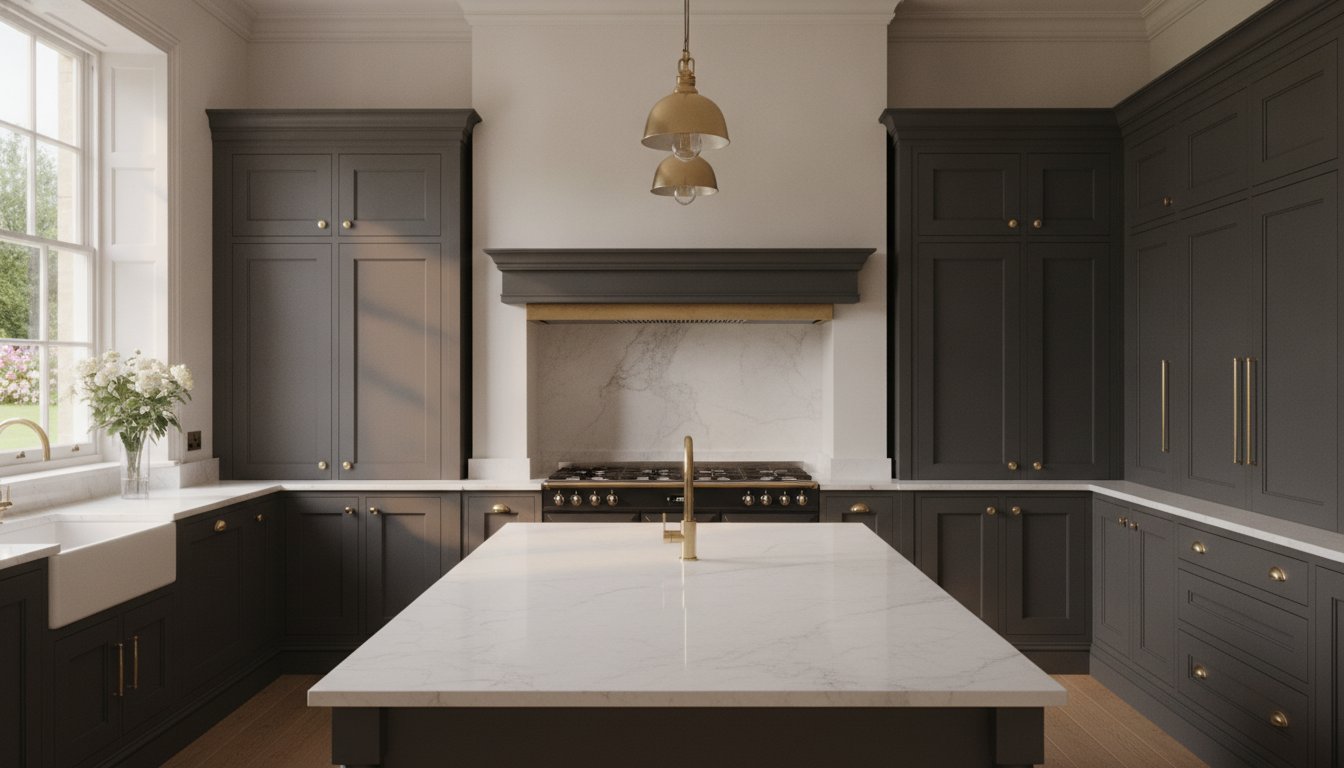
A Georgian style kitchen isn't a museum piece; it's a masterclass in mathematical harmony that remains the gold standard for Cheshire's most prestigious homes. You likely appreciate the grand symmetry and elegant proportions that define this era, yet it's common to feel hesitant about the execution. Many homeowners worry that a period-inspired space might feel dated or that they'll struggle to find true bespoke quality without an astronomical price tag.
We understand that you want a kitchen that feels both historic and highly functional for modern life. In this guide, we'll show you how to blend 18th-century design principles with modern bespoke functionality to create a sophisticated, timeless environment. You'll learn how to distinguish Georgian elegance from simpler Shaker styles and see how investing in high-quality materials can significantly increase your property's value. From symmetrical cabinetry to integrated modern appliances, we're exploring how to bring a sense of quiet grandeur back to the heart of your home.
Key Takeaways
- Learn how the mathematical principles of symmetry and proportion create a sense of grand, understated luxury in your home.
- Discover how to integrate high-tech appliances seamlessly within a bespoke georgian style kitchen without compromising its period aesthetic.
- Identify the specific architectural details, such as fielded doors and raised panels, that distinguish true Georgian design from standard Shaker cabinetry.
- Explore how a carefully chosen palette of matt-finish colours and high-quality materials can add significant long-term value to your Cheshire property.
- Understand why a personalised home visit is the most effective way to ensure your kitchen layout works in harmony with your home's unique natural light.
Defining the Georgian Style Kitchen: Symmetry and Timeless Elegance
The enduring appeal of the georgian style kitchen lies in its quiet confidence. Whilst Victorian design often leaned into ornate clutter, the Georgian era was defined by a balance of grand proportions and understated luxury. Historically, kitchens in this period were functional, subterranean spaces meant for staff; today, we've elevated those architectural principles to create the primary social hub of the home. This transition requires a deep understanding of the Georgian architectural style, which draws heavily from the mathematical "Golden Ratio" to ensure every element feels perfectly placed. In Cheshire towns like Knutsford and Altrincham, where period properties boast high ceilings and large sash windows, this style feels like a natural extension of the building’s soul rather than a modern intrusion.
The Rule of Symmetry in Georgian Design
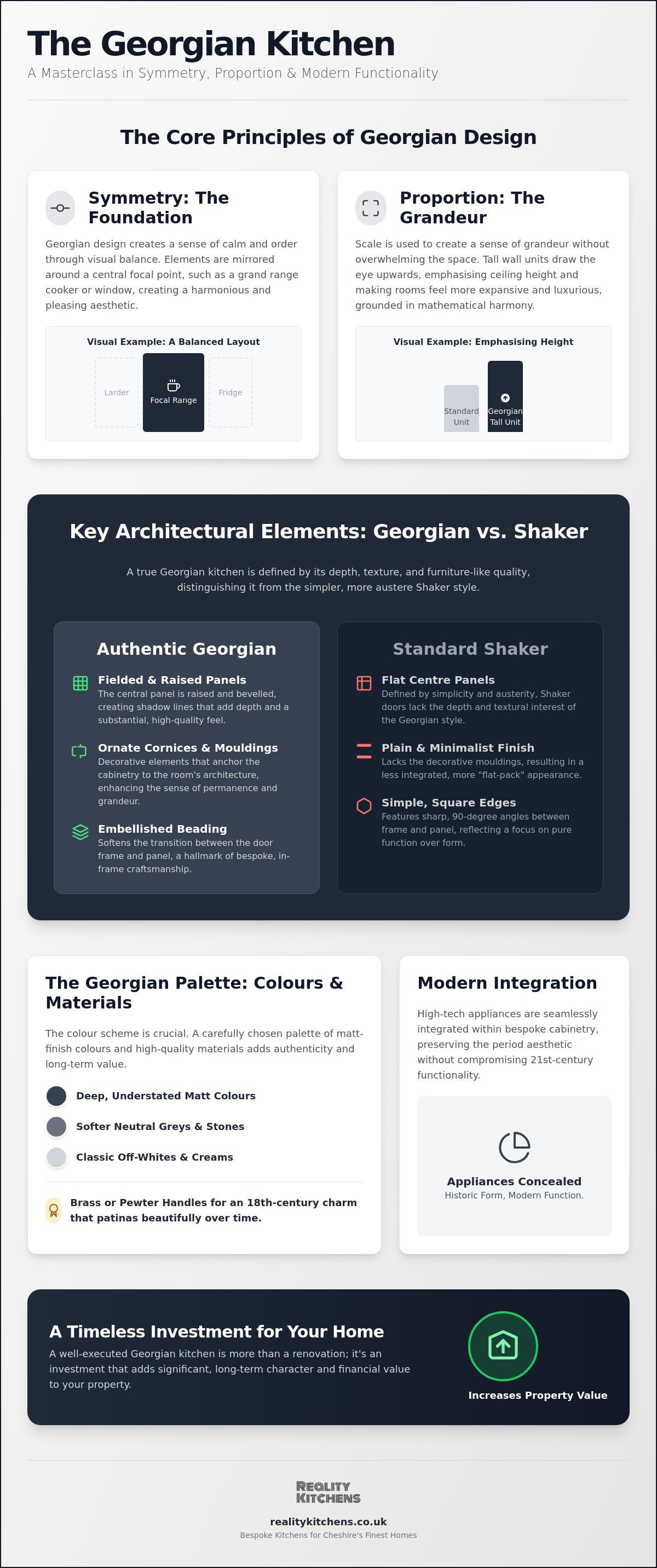
Symmetry is the foundation of the Georgian aesthetic. It creates a sense of visual order that feels inherently calming. In a modern bespoke layout, we often use a central focal point, such as a grand range cooker or a large window, to anchor the room. From there, we mirror the cabinetry on either side. If you have a larder unit on the left, a matching unit or integrated fridge on the right maintains that essential balance. Don't worry if your Cheshire home has non-rectangular rooms or awkward alcoves. We use bespoke cabinetry to "square off" these spaces, using clever fillers and custom depths to create the illusion of perfect symmetry even in the most eccentric floor plans.
Proportion and Scale: Making Grandeur Practical
Achieving a sense of grandeur doesn't require a manor house; it requires an understanding of scale. We use tall wall units that extend toward the ceiling to emphasise the vertical space, making even modest rooms feel more expansive. It's about finding the right equilibrium between the furniture and the architecture. A large kitchen island can be a stunning centrepiece, but it must be balanced with enough peripheral floor space to allow for easy movement. At its core, Georgian proportion is the measured relationship between cabinetry height and the total volume of the room. By getting this ratio right, we ensure your georgian style kitchen feels substantial and high-end without overwhelming the home’s natural flow.
Our approach avoids the "museum" trap by focusing on how you actually use your space. We combine these 18th-century layout principles with the high-performance materials expected in a 21st-century Cheshire home, ensuring your kitchen is as practical as it is beautiful.
Key Architectural Elements of a Georgian Kitchen
While many homeowners confuse the two, a true georgian style kitchen is far more layered than its Shaker cousin. Shaker design is defined by its austerity and flat panels; Georgian design, however, embraces depth and texture. The primary differentiator is the use of fielded doors, where the central panel is raised and bevelled rather than flat. This creates a shadow line that catches the light, giving your cabinetry a furniture-like quality that feels substantial and permanent. These details are rooted in the wider Georgian period design, which prioritised classical motifs and structured elegance above all else.
To achieve that sought-after Cheshire grandeur, we look at the vertical details. Traditional mouldings and ornate cornices aren't just decorative; they anchor the kitchen to the room's architecture. We often use pilasters, which are decorative columns, to frame key areas like a Belfast sink or the range cooker. This framing technique highlights the symmetry we discussed previously, ensuring your most-used zones feel intentional and grand. It's these subtle architectural cues that prevent a new installation from looking like a flat, modern "kit" kitchen.
Georgian Beading and Cabinetry Details
The beauty is in the beading. Unlike the simple square edges of modern frames, Georgian cabinetry features embellished beading that softens the transition between the frame and the panel. For an authentic finish, we always recommend in-frame construction. This is where the door sits flush within a timber frame, a hallmark of bespoke craftsmanship that ensures your kitchen remains structurally sound for decades. When it comes to finishing touches, brass or pewter handles offer an 18th-century charm that patinas beautifully over time. If you're ready to start planning, our team can help you refine your bespoke design to suit your specific home layout.
The Grand Mantel: A Georgian Centrepiece
No Georgian-inspired space is complete without a grand mantel. This isn't just a shelf; it's a structural statement that transforms a standard cooker into a focal point. A bespoke mantel, supported by carved corbels, provides that classic English aesthetic so popular in Northwich and Knutsford properties. It’s about turning a functional cooking zone into a piece of architectural art. Integrating these elements is a key step in achieving your dream kitchen design, bridging the gap between historical inspiration and modern reality.
Choosing the Georgian Palette: Colours and Materials
The palette you choose for a georgian style kitchen defines its atmosphere more than any other element. Whilst early 18th-century designs often featured deep, rich pigments like burgundy or forest green, the later period shifted toward softer, airy pastels. Today, we're seeing a resurgence of "Heritage Bold" tones—think deep navy or charcoal—used to ground large rooms with high ceilings. It's a mistake to assume Georgian design must be beige; instead, it's about the quality of the pigment and the texture of the application. A hand-painted finish is paramount here. It allows the natural grain of the timber to breathe whilst providing a soft, matt texture that ages gracefully, unlike the clinical, high-gloss finishes of modern mass-produced units.
Modern bespoke design also allows us to experiment with "mixed materials." You might choose a hand-painted island in a contrasting dark tone to sit against lighter peripheral units. This layering of textures prevents the room from feeling like a static showroom and instead creates a space that feels evolved and personal. By focusing on tactile quality, you ensure the kitchen remains the heart of the home for decades.
Heritage Paint Finishes for Cheshire Homes
Choosing the right shade requires looking at how light moves through your home. We often recommend tones like Sage Green for garden-facing rooms or Stone Beige for north-facing spaces that need warmth. A sophisticated technique gaining popularity in Cheshire is the "monolithic" look, where you paint both the cabinetry and the walls in the same hue. This reduces visual noise, allowing the identifiable features of Georgian architecture, such as high skirtings and window shutters, to take centre stage. Hand-painting also offers a pragmatic benefit: it's incredibly easy to touch up if a door gets scuffed, ensuring your investment looks pristine for decades.
Worktops and Flooring: The Foundation of the Look
The surfaces you touch every day should feel as authentic as the cabinetry looks. Natural stone is the only logical choice for a Georgian-inspired space. Marble was the historical preference, but high-quality Quartz offers the same timeless veining with significantly less maintenance for a busy family home. If you're weighing up different stone options, our guide to kitchen worktops Northwich provides a detailed comparison of materials that suit this aesthetic.
To ground the design, flooring should reflect the period's focus on durability and pattern. Large-format flagstones are perfect for a farmhouse-leaning georgian style kitchen, whereas oak herringbone timber adds a layer of refined warmth that complements the symmetry of the units. By mixing these tactile materials—cold stone, warm wood, and soft paint—you create a kitchen that feels layered, lived-in, and undeniably high-end.
Integrating Modern Functionality into a Period Aesthetic
It’s a common misconception that choosing a georgian style kitchen means sacrificing the convenience of 21st-century technology. You might ask, "Will a Georgian kitchen work for modern cooking?" and the answer is a resounding yes. Whilst the 18th-century layout was designed for a different pace of life, the structural principles of this style are actually perfectly suited to high-performance modern appliances. The key lies in concealment. By using bespoke cabinetry to hide high-tech gadgets, you maintain the visual serenity of a period room whilst enjoying the efficiency of a professional-grade kitchen. It’s about creating a space that feels historically inspired but functions with effortless modern precision.
The "hidden pantry" has become a staple of modern Georgian design for this very reason. It allows you to tuck away small appliances, coffee stations, and daily clutter behind elegant, fielded doors, keeping your primary work surfaces clear for food preparation. If you’re unsure how to balance your tech requirements with a period look, our experts can help you plan your bespoke kitchen layout to ensure every detail is considered.
The Art of Integrated Appliances
We use bespoke larders to house fridges and ovens, ensuring that large expanses of stainless steel don't disrupt the flow of your hand-painted cabinetry. This approach allows us to blend a modern induction hob into a traditional mantel setting, providing a sleek cooking surface that remains almost invisible to the naked eye. We also integrate modern essentials like wine coolers and boiling water taps into discreet zones, often housing them within islands or alcoves to keep the main worktops clear. Bespoke cabinetry allows for seamless appliance integration without breaking the room's essential symmetry, ensuring your high-tech equipment is as unobtrusive as your spice drawer.
Smart Storage in a Classic Shell
The challenge of a period kitchen is often the perceived lack of storage, but modern internal mechanisms solve this effortlessly. We design deep, heavy-duty drawers that look like traditional cupboard doors from the outside, maintaining the historical aesthetic whilst providing easy access to heavy pots and pans. Corner carousels and pull-out spice racks ensure that every square inch of your cabinetry is utilised. A bespoke "Butler Pantry" is another essential feature, providing a dedicated zone for organising modern life, from hidden charging stations to dry goods storage. These clever solutions ensure your kitchen remains a highly functional workspace that never feels cluttered or overwhelmed by the demands of contemporary living.
Bringing Your Georgian Style Kitchen to Life in Northwich
Planning a georgian style kitchen requires more than just a catalogue; it requires a deep understanding of your home’s existing architecture. Whilst showrooms offer a glimpse of what’s possible, they can never replicate the unique proportions or the specific play of light in your own space. Seeing a kitchen under artificial spotlights is fundamentally different from seeing how morning light hits a hand-painted finish in your own Northwich home. By bringing the design process directly to you, we ensure the mathematical symmetry essential to this style is perfectly aligned with your windows, doors, and ceiling heights.
This approach also allows us to offer luxury bespoke kitchen design Northwich homeowners can trust, without the unnecessary "showroom premium." We’ve eliminated the high overheads of a physical retail space to focus entirely on the quality of your components and the expertise of the installation. It’s a pragmatic business model that ensures more of your budget is invested in the high-end materials and craftsmanship that will last for decades. You get the same prestige quality found in high-end corporate firms, but with a more personal, localised connection.
The Reality Kitchens Design Process
During our first visit, we don't just measure walls; we assess the architectural soul of the building. We look for those period features that can be echoed in your cabinetry mouldings or mantel design to create a cohesive look. To ensure a flawless finish, we collaborate with skilled local installers across Hartford and Weaverham who understand the nuances of period property renovations. Every kitchen we provide comes with a ten-year guarantee, providing the peace of mind that your investment is as durable as it is beautiful.
Why Local Expertise Matters
Cheshire is home to a diverse range of property types, from the grand Victorian villas of Altrincham and Bowdon to the refined Georgian terraces in Hale. Each requires a tailored approach to ensure the georgian style kitchen feels like a natural part of the home’s history rather than a modern bolt-on. Our commitment is to deliver these luxury environments at realistic prices by maintaining a transparent and efficient operation. We act as your knowledgeable guide, navigating the complexities of sourcing and installation so you can focus on the emotional fulfilment of your new space.
Ready to transform your home with timeless elegance? Contact Reality Kitchens for a home design visit to begin your journey toward a bespoke Georgian-inspired kitchen.
Start Your Journey to a Timeless Cheshire Home
Creating a georgian style kitchen is about more than just cabinetry; it's about honouring the architectural heritage of your property whilst embracing the comforts of modern living. By prioritising mathematical symmetry and choosing high-quality materials like natural stone and hand-painted timber, you ensure your kitchen remains a grand, sophisticated hub for decades. We've discussed how bespoke design allows you to hide high-tech appliances behind elegant facades, maintaining that essential period aesthetic without compromising on daily functionality.
At Reality Kitchens, we believe luxury should be accessible. Our professional home-visit service across Cheshire allows us to design in the natural light of your own space, ensuring every proportion is perfect. Because we operate without expensive showroom overheads, we deliver bespoke luxury at realistic prices. Every component we provide comes with a ten-year guarantee, giving you long-term peace of mind. If you're ready to move from inspiration to implementation, we're here to act as your knowledgeable guide. Book your bespoke home design consultation in Northwich today and let's bring your vision to life. Your dream kitchen is closer than you think.
Frequently Asked Questions
What is the difference between Shaker and Georgian kitchen styles?
Shaker kitchens focus on simplicity and flat panels, whilst a georgian style kitchen features detailed beading and fielded, or raised, panels. These architectural layers create visual depth and a more formal, furniture-like appearance. Whilst Shaker is often considered utilitarian, the Georgian aesthetic leans towards classical elegance and grand proportions rooted in 18th-century design.
Can I have a Georgian style kitchen in a modern new-build home?
You can certainly integrate this style into a new-build home to add immediate architectural character and soul. The clean lines and mathematical symmetry of a Georgian layout often suit the square, uniform rooms of modern properties perfectly. It is an effective way to move away from a standard look and create a space that feels established and high-end.
What are the best colours for a Georgian style kitchen?
Muted heritage tones like sage green, stone beige, and deep navy are the most popular choices for a georgian style kitchen. These colours highlight the intricate beading and mouldings without overwhelming the room. We always recommend a hand-painted matt finish, as it provides a soft, authentic texture that reflects light beautifully and ages gracefully over time.
Are Georgian kitchens more expensive than modern styles?
Bespoke Georgian designs involve more intricate craftsmanship than minimalist modern styles, but they don't have to be prohibitively expensive. Our business model removes the showroom premium, allowing you to invest your budget into high-quality components and installation rather than retail overheads. This ensures you receive a high-end period aesthetic at a much more realistic price point.
How do I maintain hand-painted Georgian cabinetry?
Maintaining hand-painted cabinetry is straightforward and requires only a soft, damp cloth and mild soapy water. You should avoid harsh chemical cleaners that might strip the paint finish over time. One of the greatest benefits of hand-painted units is that they're incredibly easy to touch up if they get scuffed, unlike factory-finished vinyl wraps which often require a full door replacement.
Can I include a kitchen island in a Georgian design?
A kitchen island is a fantastic addition to a Georgian design, provided it respects the room's overall symmetry. We often design islands to act as a central anchor, mirroring the proportions of the peripheral cabinetry to maintain balance. It is a practical way to add modern prep space and seating whilst maintaining the grand, balanced feel that defines this historical style.
What type of handles should I use for a Georgian kitchen?
Traditional materials like brass, pewter, and antique bronze are the best choices for handles and knobs in this style. For an authentic look, consider using a mix of classic round knobs on cupboards and traditional cup pulls on drawers. These materials develop a beautiful patina over time, adding to the lived-in character and prestige of your bespoke kitchen.
How long does it take to design and install a bespoke Georgian kitchen?
The timeline for a bespoke project typically ranges from 8 to 12 weeks from the final design approval to the completed installation. This allows for the precise manufacturing of your custom components and the careful hand-painting of your cabinetry. We provide a clear schedule at the start of every project to ensure the process is transparent and stress-free.


